Kinabatangan MP Bung Moktar Radin has been slapped with a jail sentence for unlawfully entering into a polygamous marriage with actress Zizie Izette Abdul Samad. The Gombak Timur Lower Syariah Court also sentenced him this morning to a fine of RM1,000 for abetting Zizie in the offence. If he does not pay the fine by 5pm, he is liable to another month's jail. There was a gasp in the packed courtroom when Syarie Judge Wan Mahyuddin Wan Muhammad read out the sentence about 9.15am. She was also ordered to pay another RM1,000 or six months' jail in default for abetting Bung Moktar, 51. Zizie, 31, is required to pay the full sum by the end of today. The defence immediately applied for a stay of execution on Bung Moktar's jail sentence. Lawyer Amli Embong reasoned that the intended appeal would be meaningless without this, as Bung Moktar would have served all or most of the sentence by the time the appeal is heard. After a short recess, the court accepted the application. Bung Moktar will have to file his appeal in 14 days at the Syariah High Court in Shah Alam. Pending that, he has been placed under a bond of RM1,000 with one surety. The MP's two friends - Sahari Ahmad, 54, and Titing Putang, 56 - were each fined RM1,000 each for abetment or six months' jail in default. They too have up to the end of today to pay the sum. Zizie's three brothers - Ahmad Shahazmi Abdul Samad, 48, Samzy Fuzette Abdul Samad, 34, Shaheizy Sam Abdul Samad, 27 - were similarly penalised on the same charge. In addition: Among those present were family members and friends of the accused, who has to jostle for space in the small courtroom. Members of the Joint Action Group for gender equality also attended the proceedings - they had protested outside the court yesterday. 'Heavier penalty required' Syarie Judge Wan Mahyuddin Wan Muhammad said the case has received wide media coverage and can be a lesson to members of society who "take polygamy and rules governing marriage lightly". "The accused had bad intentions and had toyed with the marriage solemnisation process and the rules of polygamy according to Syariah law." On April 20, Bung Moktar and Zizie had pleaded guilty to entering into a polygamous marriage on Dec 16 last year without the court's permission. This report is from http://www.malaysiakini.com Zizie was fined RM1,000 or 1 month's jail in default for entering into the marriage.
He also argued that serving the sentence would jeopardise Bung Moktar's livelihood and cause anxiety to him and his family.
He also concurred with the prosecutor in saying that, as a lawmaker, Bung Moktar should have had more respect for the law.
"Nowhere in the defence mitigation was it stated that the marriage was necessary and reasonable," he noted.
He added that a RM1,000 maximum fine for this offence is insufficient as most people can afford to pay it.
"The time has come for a heavier punishment to protect the credibility of Syariah law," he said.
They also pleaded guilty to abetting one another in the offence, which carries a maximum punishment of RM1,000 or six months' jail or both.
The sentence will not affect Bung Moktar's position as a MP as the law states that a parliamentarian will only lose his seat if convicted of an offence and sentenced to not less than one year's jail or fined not less than RM2,000, and has not received a free pardon.
Wednesday, 19 May 2010
Kinabatangan MP jailed one month for polygamy


Saturday, 15 May 2010
20 Points - Sabah's Safeguard
Sabah's conditions for joining the Federation of Malaysia
-
Religion:
While there was no objection to Islam being the national religion of Malaysia there should be no State religion in North Borneo, and the provisions relating to Islam in the present Constitution of Malaya should not apply to North Borneo.
-
Language:
(a) Malay should be the national language of the Federation;
(b) English should continue to be used for a period of ten years after Malaysia Day;
(c) English should be the official language of North Borneo, for all purposes State or Federal, without limitation of time
-
Constitution:
Whilst accepting that the present Constitution of the Federation of Malaya should form the basis of the Constitution of Malaysia, the Constitution of Malaysia should be a completely new document drafted and agreed in the light of a free association of States and should not be a series of amendments to a Constitution drafted and agreed by different States in totally different circumstances. A new Constitution for North Borneo, was, of course, essential.
-
Head of the Federation:
The Head of the State in North Borneo should not be eligible for election as head of the Federation.
-
Name of Federation:
‘Malaysia’ but not ‘Melayu Raya’ (or ‘Greater Malaya’).
-
Immigration:
Control over immigration into any part of Malaysia from outside should rest with the Federal Government but entry into North Borneo should also require the approval of the State Government. The Federal Government should not be able to veto the entry of persons into North Borneo for State Government purpose except on strictly security grounds. North Borneo should have unfettered control over the movement of persons, other than those in Federal Government employ, from other parts of Malaysia into North Borneo.
-
Right of Secession:
There should be no right of secession from the Federation.
-
Borneoisation:
Borneoisation of the public services should proceed as quickly as possible.
-
British Officers:
Every effort should be made to encourage British Officers to remain in the public services until their places can be taken by suitably qualified people from North Borneo.
-
Citizenship:
The recommendations in paragraph 148(k) of the Report of the Cobbold Commission should govern the citizenship rights in the Federation of North Borneo persons subject to the following amendments:
(a) Sub-paragraph (i) should not contain the proviso as to five years residence;
(b) In order to be consistent with the laws of North Borneo, sub-paragraph (ii) (a) should read ’seven out of ten years’ instead of ‘eight out of twelve years’;
(c) Sub-paragraph (iii) should not contain any restriction tied to the citizenship of parents – a person born in North Borneo after Malaysia (was formed) must be a Federal citizen.
-
Tariffs and Finance:
North Borneo should have control of its own finance, development funds and tariffs.
-
Special Position of Indigenous Races: In principle, the indigenous races of North Borneo should enjoy special rights analogous to those enjoyed by Malays in Malaya, but the present Malaya formula in this regard is not necessarily applicable in North Borneo.
-
State Government:
(a) The Chief Minister should be elected by unofficial members of (the) Legislative Council;
(b) There should be a proper Ministerial system in North Borneo.
-
Transitional Period:
This should be seven years and during such period legislative power must be left with the State of North Borneo by the Constitution and not be merely delegated to the State Government by the Federal Government.
-
Education:
The existing educational system of North Borneo should be maintained and for this reason should be under State control.
-
Constitution Safeguards:
No amendment, modification or withdrawal of any special safeguards granted to North Borneo should be made by the Federal Government without the positive concurrence of the Government of the State of North Borneo. The power of amending the Constitution of the State of North Borneo should belong exclusively to the people in the State.
-
Representation in Federal Parliament:
This should take account not only of the population of North Borneo but also its size and potentialitis and in any case should not be less than that of Singapore.
-
Name of Head of State:
Yang di-Pertua Negara.
-
Name of State:
Sabah.
-
Land, Forests, Local Government, etc.:
The provisions in the Constitution of the Federation in respect of the powers of the National Land Council should not apply in North Borneo. Likewise the National Council for Local Government should not apply in North Borneo.
Tuesday, 27 April 2010
Historical Speeches by World's Great Leaders
April 25th, 2010
HERE http://www.onlineuniversities.com/blog/2010/04/50-incredible-historical-speeches
You hope that your professors will be good speakers who can keep your interest for at least the length of a class period, but more often than not, you'll have a teacher or two each semester who drones on and on and doesn't make you feel passionate about the subject. They could take tips from these speakers who have inspired thousands or even millions of people around the world, some even long after they've died. Here are 50 incredible, historical speeches you should watch online.
Commencement Addresses
These commencement speakers include presidents, a professor, political strategist and industry leader.
1. John F. Kennedy at American University: On June 10, 1963, President JFK gave the commencement address at American University, first celebrating the institution of American universities, and then discussing the "new face of war" and its great cost. Kennedy implores the graduates to pursue peace, even though it is not as dramatic as the pursuit of war, and references the end to the Cold War.
2. Randy Pausch at Carnegie Mellon: Randy Pausch's "Last Lecture" became an Internet sensation and inspiration for people around the world who felt moved by the professor's battle with cancer and his insistence on the power and significance of achieving your childhood dreams. Here, a visibly ill Pausch, delivers the commencement address at Carnegie Mellon.
3. James Carville at Tulane University: Louisiana native and colorful political strategist James Carville gave a rousing, sincere speech to the graduates of Tulane University of 2008, the first class to graduate since Hurricane Katrina interrupted their studies and nearly destroyed the city of New Orleans.
4. Barack Obama at Notre Dame: When students and faculty at Notre Dame expressed disappointment and even outrage that President Barack Obama would speak at the school's 2009 graduation ceremony, the national media covered the debate from start to finish. In the end, Obama did give the speech despite the controversy over his support of abortion, which the Catholic university disapproved of.
5. Steve Jobs at Stanford: Computer science pioneer Steve Jobs gave an emotional but inspirational speech to the 2005 graduates of Stanford University, ending with the line "Stay hungry, stay foolish," a message that Jobs has always wished for himself and which he wished for the graduates.
Presidential Speeches
Presidents are natural and practiced leaders and give some of the most impressive speeches. Here is a selection of some of the most important speeches of the 20th century.
1. Barack Obama Election Night Speech: Moments after being elected the first ever African American President of the United States, Obama addresses the nation live from Chicago.
2. Ronald Reagan's 40th Anniversary of D-Day Speech: Watch President Ronald Reagan give an illustrative 40th anniversary of D-Day speech on "a lonely, windswept point" on the beach at Normandy.
3. Lyndon Johnson Remarks on Signing the Civil Rights Bill: President LBJ explains to the American public the significance of his signing the Civil Rights Act of 1964.
4. George W. Bush Post 9/11 Speech: After terrorists hijacked airplanes and flew them into the World Trade Center and the Pentagon on September 11, 2001, shocked and grief-stricken Americans turned to their TV sets that evening to listen to President George W. Bush tell them what to do next.
5. Ich Bin Ein Berliner: President John F. Kennedy visited the Berlin Wall to give this encouraging speech to the everyday citizens who suffered under Communism and cheered when Kennedy repeated "Let them come to Berlin."
6. President Nixon Announcing Resignation: Scandalized President Richard Nixon addresses the nation in this speech, announcing his resignation after Watergate.
7. "Tear Down This Wall": Listen to Ronald Reagan's famous "Tear Down This Wall" speech in Berlin in front of the famous Berlin Wall.
8. George W. Bush's Bullhorn Speech: What is now known as Bush's "Bullhorn Speech" started as a casual impromptu rally for the recovery workers at Ground Zero, just after the 9/11 terrorist attacks. Bush stood on top of a hill of rubble and yelled to the crowd "I can hear you! The rest of the world hears you!"
9. Jimmy Carter Crisis of Confidence Speech: Carter talks about the "crisis in confidence" that Americans had in government.
10. JFK Inaugural Address: JFK's inaugural address is one of the most famous swearing-in speeches in history.
11. LBJ's First Speech as President: Listen to LBJ's first speech as President, just after JFK was shot.
12. The Challenger Explosion: Reagan shares news of the Challenger Explosion from the Oval Office.
13. John F. Kennedy's Moon Speech: Kennedy addresses Congress and asks them to support the space project.
14. President Bill Clinton Farewell Speech: Clinton recaps his presidency and defends his legacy in this speech.
15. President Harry S Truman First Speech to Congress: This is Truman's first speech to Congress, in which he mourns recently deceased FDR.
16. LBJ Gulf of Tonkin Incident: President LBJ reports on the violent Gulf of Tonkin Incident.
Society and Culture
Here you will find speeches that inspired social change and encouraged audiences to become better citizens of the world.
1. Martin Luther King "I Have a Dream": Watch one of the most iconic American speeches ever made here: Martin Luther King's "I Have a Dream" speech.
2. William Faulkner Nobel Prize speech: Look at a photograph of author William Faulkner accepting his Nobel Prize as you listen to his speech about the condition of the human spirit and the human heart.
3. LBJ We Shall Overcome: This video uses LBJ's famous We Shall Overcome speech as part of a video montage celebrating the civil rights movement.
4. Malcolm X By Any Means Necessary: Malcolm X addresses friends and enemies and explains how he'll fight for civil rights "by any means necessary."
5. Death of Martin Luther King, Jr., Robert Kennedy: Robert Kennedy announces the death of MLK and then eulogizes the civil rights leader in this 1968 speech.
6. Lou Gehrig's speech: Lou Gehrig gives his farewell to baseball speech on the 4th of July at Yankee Stadium.
7. The Perils of Indifference: Listen to Elie Wiesel's famous speech about the nature of indifference.
8. Mario Savio: Listen to this exciting, impassioned speech from a very worked up Mario Savio, a member of the Berkeley Free Speech Movement.
9. Give Them Hope Speech: Harvey Milk aims to give gay people around the country a feeling of hope that they belong in society and have rights and deserve respect.
10. Reagan's Evil Empire Speech: Ronald Reagan gives his famous Evil Empire speech to the National Association of Evangelicals.
11. Nelson Mandela Released 1990: When Nelson Mandela was released from prison in 1990, he gave this speech to supporters.
12. Jimmy Valvano's ESPY Speech: Dying basketball coach Jimmy Valvano delivered this famous, inspiring speech at the first ever ESPYs in 1993. He died of cancer two months later.
13. Bill Cosby Famous Pound Cake Speech: Comedian Bill Cosby gives a touching but humorous speech in honor of the 50th anniversary of Brown v. Board of Education.
14. Kofi Annan's Farewell Speech: UN Secretary General Kofi Annan bids farewell in this 2006 speech.
15. Mahatma Gandhi Speech: Gandhi gave this speech at Kingsley Hall in London in 1931. In it, he discusses the nature of rule and religion.
War and Peace
Listen to speeches from Hitler, Churchill, Eisenhower and other military leaders about war and peace.
1. FDR Pearl Harbor Address: Just after the United States is attacked by Japan at Pearl Harbor, President Franklin Roosevelt addresses the country and Congress in his famous "date which will live in infamy" speech.
2. General Dwight D. Eisenhower's D-Day Speech: Listen to Eisenhower's speech ordering troops to D-Day here.
3. General Douglas MacArthur Farewell Speech to Congress: General MacArthur delivers this speech in 1951 "with deep humility and great pride."
4. Total War Speech: This video has English subtitles so that you can understand Joseph Goebbels' speech calling for total war in 1943.
5. Sir Winston Churchill – Finest Hour: This photo montage accompanies audio of Winston Churchill's "finest hour" speech, which he gave June 18, 1940, and in which he asked the British to help him fight so that they would not enter into "a new dark age."
6. Adolf Hitler, Expand Speech: Watch Hitler's speech about expansion and justification of war.
7. Eisenower's military industrial complex speech: Watch and listen to President Eisenhower warn against te "emergency improvisation of national defense."
8. We Shall Fight on the Beaches, Winston Churchill: Listen to Churchill's signature British mumble as he rallies his country to fight in World War II.
Politics
These miscellaneous political speeches are from figures like Jesse Jackson, Margaret Thatcher and Ted Kennedy.
1. The Dream Shall Never Die: Senator Edward Kennedy speaks at the 1980 Democratic National Convention shares one of his favorite Tennyson quotes and tells Americans that "the dream shall never die" even though he will not run for president.
2. Jesse Jackson David and Goliath speech: Then Presidential candidate Jesse Jackson delivers this famous speech at Tendley Baptist Church January 16, 1984.
3. Tony Blair resignation speech: Powerful but ultimately unpopular Primte Minister Tony Blair gives his resignation speech on June 27, 2007, here.
4. Senator Barack Obama's DNC speech: Presidential candidate Barack Obama gives this major speech at the 2008 DNC in Denver, officially accepting the nomination for president.
5. William Jennings Bryan Cross of Gold Speech: Listen to audio of William Jennings Bryan's 1923 speech in which he spoke about the gold standard and silver mining.
6. Margaret Thatcher's first speech as Prime Minister: Watch Thatcher's controversial first speech as British PM in 1979.
7. Mario Cuomo 1984 Convention Speech: This "tale of two cities" from Mario Cuomo at the DNC in 1984 attacks Reagan in a time of staunch conservatism.
Friday, 23 April 2010
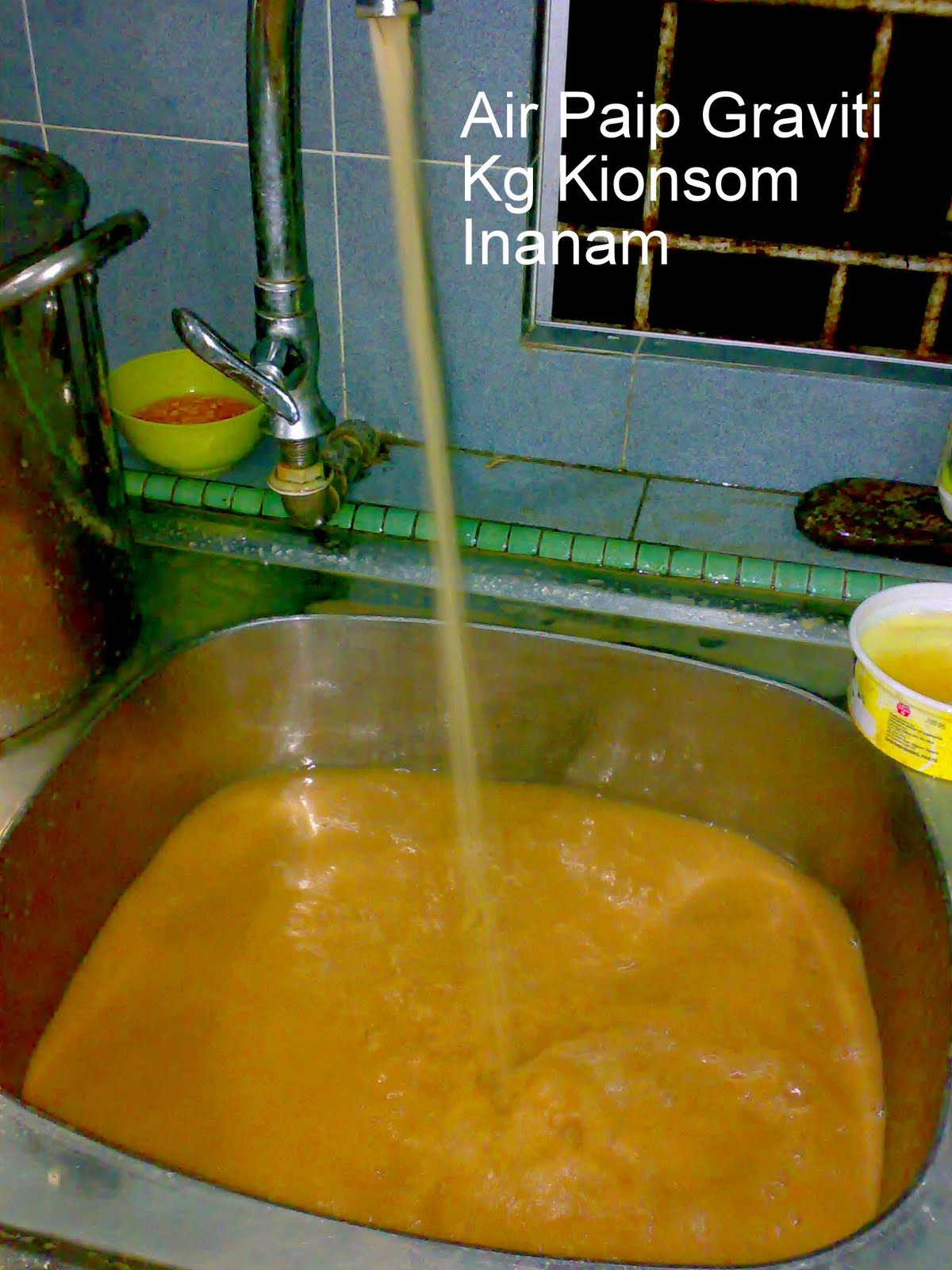
Mud coming out from taps

Wednesday, 14 April 2010
Tun Fuad Stephens
"Truth Is The Remedy To All". Fuad Stephens and his Cabinet Members "POLITICALLY ASSASSINATED" ?
By Ronnie Klassen as published HERE http://advocateviews.blogspot.com/
As sure as an orphan would want to know his parents, Sabahans want to and must know the truth as to what really happened on the 6th.June.1976.Was the death of Tun Fuad Stephens and his Cabinet members an accident or 'accident'? Reliable sources claimed that the fatal Nomad Aircraft carrying Tun Fuad exploded in mid-air and dropped to the ground where a second explosion occurred. Why was the aircraft requested to circle and not given the green light to land?
Doesn't the Chief Minister of Sabah take precedence over everyone? Did the control tower inform the pilot to circle because an Air force Hercules C-130 was about to take off? Reliable sources also claim there was no Hercules C-130 on the tarmac that was ready to take off on that day.
In my earlier 2 articles in my blog on the oil royalty issue, we referred to information that was never made known to Sabahans. The revelation by Tengku Razaleigh Hamzah that he was already strapped to his seat alongside Datuk Rahman Yaakub(Chief Minister of Sarawak) and a member of the Pahang Royalty and together with Tun Fuad and his Cabinet Ministers and later requested to disembark from the aircraft by Harris Salleh to visit a cattle farm in Kudat/Banggi is not only baffling but against any protocol- hence a huge can of worms has now open.
It is also tantamount to insubordination and an insult to the Chief Minister then, Tun Fuad. Harris Salleh in a recent press statement ( Daily Express dated 7th.April.2010 ) denounced this fact in what he claimed to be" grossly inaccurate and carried away with pleasantries ".
Was the visit to the cattle farm more important than the historical event that was going to take place - which was the signing of the petroleum agreement between the Sabah Government and the Federal Government/Petronas? Was visiting this cattle farm in the agenda of Razaleigh's visit? Who is now LYING ? The people of Sabah now demand to know the truth. Was this a " political assassination "?
Researching this event gave me the opportunity to come into contact with many Sabahans who are still till this very day angered by the events that took place on the 6th.June.1976.Was there a " BOMB " planted in the ill-fated Nomad Aircraft ? If a bomb did exist who planted it and under whose instruction?
And who is Lee Kang Yu ? It was reliably learnt that Lee Kang Yu was a trusted aid and trustee to Harris Salleh, who fled to Hong Kong where he later passed away. His thumb print had to be used for verification for withdrawal of assets before he could be laid to rest.
Did Lee Kang Yu plant a bomb in the Nomad Aircraft, and who gave the instruction? Among the first person to be at the crash site was senior information officer,TK Wong,who lived a few metres from the crash site.Ironically,the police arrived almost immediately and condoned off the entire area.No known report was submitted by the Information Department to the State Security Committee on the ill-fated crash,why?
In the purported conversation between Tengku Razaleigh and Tun Fuad Stephens, pursuant to the oil royalty, Ku Li had claimed that Tun Fuad had agreed to the 5% oil royalty as Sarawak had earlier also agreed to the 5% oil royalty.Sabah and Sarawak have over the years till this day have had a brotherly relationship.
Now Sarawakians should be asking,did Rahman Yaakub agree to the 5% oil royalty? On the morning of the 6th.June.1976,Tun Fuad and his Cabinet Ministers flew to Labuan with an objective to re-negotiate. Tun Fuad was in total disagreement to the 5% oil royalty hence he brought his Cabinet Ministers to say their piece to Tengku Razaleigh. Did Tun Fuad and his Cabinet inform Tengku Razaleigh that if the Federal Government did not agree to his demand for an increased share percentage for Sabah, he would publicly announce that he was going to pull Sabah out of Malaysia?
In the afternoon of Good Friday (2nd.April.2010) at my lunch interview with Tengku Razaleigh, I sensed a man that was just waiting to tell the truth, but decided to provide bits and pieces and allowing others to complete the jig-saw puzzle. On the evening of the same day, Tengku Razaleigh was no longer the same person I met earlier.
Was he threatened by anyone, group or enforcement agency? Tengku Razaleigh was supposed to deliver a talk on the Petroleum Development Act 1974 as well as the problems plaguing the oil producing states in Malaysia.
Why did Tengku Razaleigh bring up the matter of the plane crash on the 6th.June.1976?
Was he deliberately trying to tell the truth but not the whole truth?In the presence of about 1,000 odd people who were in attendance at the dialogue, Tengku Razaleigh clearly stated that he was all strapped up in the ill-fated Nomad Aircraft and ready to fly with Tun Fuad to Kota Kinabalu, until Harris Salleh boarded the aircraft and"invited" him to visit the cattle farm in Kudat/Banggi, which apparently was more important and took precedence over the signing of the oil royalty agreement.
Another interesting episode of the crash, was the inconsistent manner in which the Inquiry was conducted. The Magistrate concerned requested for a full re- investigation in"an open verdict" as reported in the newspapers but did the authorities re-investigate the crash ? Why not?Whose was the hidden hand that instructed the authorities NOT to re-investigate the crash? Perhaps the time has come for this Magistrate to appear and tell the truth.
Since the exposure of these new developments in my blog, a few political leaders have "suddenly" come out demanding for the case to beRE-OPENED. I applaud the daring stand taken by Datuk Yong Teck Lee and Dr.Jeffery Kitingan in demanding a new investigation on what actually happened on the 6th.June.1976.
What is mind boggling and beyond comprehension is the reversal of the stand of the Sabah State Government. Chief Minister, Musa Aman in a press statement(Daily Express, dated 7th.April.2010 ) said "the amount of allocation from the Federal Government pouring into Sabah is more important than discussing an increase in the oil royalty for the state ", " KL has been very generous with funds for Sabah". He further added "to me ,what's important here is we don't talk about oil royalty".
My question to Musa Aman is, when did Sabah become so rich that our own resources are not important to discuss? Allow me to jerk the memory of our delusional Chief Minister. Sabah is currently the second poorest state in Malaysia and the oil in Sabah belongs to the people of Sabah. Are Chief Ministers required to take an oath of secrecy never to divulge the truth on what actually happened on the 6th.June.1976?
Oil is a gift from God to the people of Sabah, and 'His' name is not Musa Aman. Musa Aman's remarks, clearly proves that Tengku Razaleigh was probably not lying when he mentioned thatNO SABAH CHIEF MINISTER had ever made any attempt to re-negotiate, request or demand from the Federal Government for a larger oil royalty stake for Sabah. Musa Aman has therefore insulted the intelligence of Sabahans and should do the honourable thing by resigning or better yet dissolving the entire assembly and call for fresh state elections.
Could history have changed for the better had Tun Fuad and his Cabinet Ministers not perished in that controversial crash? The truth must be told and the people of Sabah have every right to know the truth and no one has the right to say otherwise. I therefore urge the family members of Tun Fuad and his Cabinet Ministers to join and assist me as well as all right thinking Sabahans who till this day are devastated by the death of our warriors to demand for the truth to be told. The tears of many are still flowing, let us not remain persecuted by "cover- up's ".
"Truth Is The Remedy To All" said Guru Nanak, Sikhism's revered founder and so - let the truth be told.
And, if made necessary through new facts and revelations, let's correct and rewrite Our Sacred History.
Posted by Ronnie Klassen at 2:31 AM
Wednesday, 7 April 2010
Ex-Malay Mail (NST) news editor K Bala dies
Ex-Malay Mail news editor K. Bala dies
GEORGE TOWN: Former Malay Mail news editor K. Bala passed away in Langkawi yesterday.
He was found dead in his bed in a hotel room by his friend R. Sunther at around 10pm last night.
Bala, 66, who was pursuing business prospects in Langkawi, leaves behind three children; a son and two daughters. His wife had died two years ago from cancer.
According to Sunther, Bala, a veteran journalist who was known to be a disciplinarian among his peers, was unwell on Friday.
"I brought him to the Langkawi Hospital for treatment and he was given medication. On Saturday, we called to check on him and he replied that he was feeling better. He was looking forward to watching the Manchester United versus Chelsea football match. I am shocked to discover that he passed away suddenly (yesterday)," said Sunther when contacted.
Bala who is the elder brother of The Star's former regional editor P.K. Katharason, was a lifelong fan of the Manchester United football club and would often take the trouble to catch all of their matches even those held in the wee hours of the morning.
Sunther said he decided to visit Bala when he did not answer the telephone calls yesterday and broke down the door when there was no reply despite the incessant knocking.
Good bye Mr K Bala
Bala, as we all called him, was one of the editors in NSTP that moulded me into what(ever) I am today. Although I was based in Kota Kinabalu, I did received lots of assignments from him who is based at the news desk in Bangsar, Kuala Lumpur. I lost contact with Bala when he quit NST and lived in Langkawi.
I am also a close friend of Bala's brother Mr P Katharason (PK to us all), a news editor with the Star. PK now lives in Kota Kinabalu after retiring ftrom Star. I remember when PK was transferred to Kota Kinabalu. Bala called me from Kuala Lumpur, telling me to `look after" PK and I did by taking PK on a `pubs hopping visit.'
I also will never forget a time when Bala was in Kota Kinabalu to lead NST's coverage of Tun Ghaffar Baba, newly appointed Deputy Prime Minister. I was to play host to Bala and now I felt I was then a very poor host to a great man. Many knew, or might had been told by Bala, What had transpired during his stay in Sabah,
I am sure that journalists and those who knew Bala mourns his passing. Good-Bye Mr Bala.
Good bye Mr Bala
Monday, 5 April 2010
Tukar Baju says Kalakau

'It's time to 'tukar baju' and kick out BN'
Sun, 04 Apr 2010 12:08
KOTA KINABALU: Newly-minted opposition politician Kalakau Untol is bent on helping the Kadazan Dusun and Murut (KDM) communities of Sabah to 'tukar baju' (change shirt) in the next general election.
Kalakau, the United Sabah Dusun Association (Usda) president, said he was confident the indigenous community, comprising more than 30 ethnic groups, other natives and the Chinese communities could topple the BN government.
"They have booted out four Sabah state governments before," he said. "Tukar Baju was our battle cry. We ousted the Alliance-led Usno, Parti Berjaya, Barisan Nasional and Parti Bersatu Sabah (PBS) state governments," he told FMT in an exclusive interview recently.
Kalakau, a former state deputy labour minister, ditched BN last month to join PKR and declared that he would be working hand-in-glove with Dr Jeffrey Kitingan and other KDM leaders.
He also said he would ensure that the community which formed the majority of the state's population would vote for Pakatan Rakyat in the next general election.
He said he expected several KDM leaders now holding important posts in the BN government, both at state and federal levels, to leave the coalition for Pakatan Rakyat.
Kalakau said he quit BN as he could no longer tolerate a life of being 'a great pretender.'
"What the BN was offering and had given out thus far was just window-dressing, but the people are politically matured now and know what is going on around them," he said.
Until he left BN, Kalakau was chairman of a state government-owned money making company and a director of several government subsidiaries companies.
"The last straw was when a university student approached me and asked if I believed in all the high praises I had heaped on the BN government during a speech I made.
"She asked me if I really meant what I said about the present government," said Kakakau.
"I was floored. It was awakening. Never in my life did it occur to me that I had been praising the government without justification.
"After a meeting with my supporters, a month later I decided to quit BN," he added.
"
These two states have been taken for granted by BN for too long. We in Sabah have changed the state government four times … it is not an impossible task.
"I travelled to far flung villages in Sabah and the response and support for PKR from the KDM was overwhelming. (It was the same when) I was in Kota Marudu, Kudat recently."
Sabah, Sarawak taken for granted by BN
The Dusun leader said the general election would the be best avenue for all Malaysians, not only for the people of Sabah 'to put on new clothes.'
"If we want to change the policy of the nation, it can only be done if you change and form a new federal government."
He said if Prime Minister Najib Tun Razak had tagged Sabah and Sarawak as BN's fixed deposit, Pakatan Rakyat could also rightfully lay similar claim to these two states.
Kalakau said the opposition could have won in the last general election if there had been a better understanding among the parties, particularly between PKR and DAP.
According to him, in all the constituencies where both PKR and DAP fielded candidates, BN emerged the victor by a slim majority of votes.
In the election, the state constituencies of Kepayan, Luyang, Inanam and Likas showed that the votes garnered by DAP and PKR were more than the votes polled by BN.
"The people of Sabah and Sarawak are aware of this and will ensure that their support will be for Pakatan Rakyat in the coming general election.
"These two states have been taken for granted by BN for too long. We in Sabah have changed the state government four times … it is not an impossible task," said Kalakau.
On his working relationship with other Sabah PKR leaders, he said he is a friend to all. Whenever he travelled, PKR leaders whether KDM or Muslims are always with him.
He said he was overwhelmed by the support for him when he was invited as a guest speaker at a gathering organised by the PKR Selangor at Stadium Malawati Shah Alam recently.
"I was relatively new in PKR but I was accepted as one of them. This is something new to me."
Made entry into politics in the 70s
Kalakau stepped into politics by forming the United Sabah Action Party (Usap) in early 1970s during Tun Musthapha's Usno-led Alliance state government.
Usap acted as an opposition party and was dissolved when he joined Pekamas in 1974, heading the Tuaran Division.
Pekamas failed to match the might of Usno so Kalakau formed another party called United Sabah Assembly Party (Pusaka) in 1977. He was made its deputy secretatry general.
Pusaka also closed shop and Kalakau joined Parti Berjaya in 1978. He joined Parti Bersatu Sabah (PBS) in 1985 and was a political secretary to then deputy Chief Minister (late) Mark Koding.
He did not last long in PBS and five years later in 1989 he resigned and formed Angkatan Keadilan Rakyat Sabagh (Akar) with Koding.
In 1994, after the PBS governmeng was toppled by BN, Kalakau joined forces with current federal minister Bernard Dompok to form Parti Demokratik Sabah (PDS), now renamed United Pasok Momogun Kadazandusun Party (Upko).
Kalakau was Tuaran MP as well as state deputy labour minister when PBS was ruling Sabah (1985-1994). In Upko, he was its youth chief for 12 years and was also a senator.
The plane crash on 6.6.1976 that killed Tun Fuad Stephens


Ku Li Opens Up More Uncertainties?
Tengku Razaleigh Hamzah may have been the last man on the face of the earth who spoke to the late Tun Fuad Stephens on the 6th of June 1976,pursuant to the controversial 5% oil royalty to Sabah.The death of Sabah's first Huguan Siou (Paramount Leader of the Kadazan / Dusuns)that perished in a "strange", fatal plane crash on the 6th.June.1976,will continue to haunt Sabahans and probably Malaysians in general for decades to come?Was the last conversation between Tengku Razaleigh and Tun Fuad Stephens on the oil royalty of 5% or was it 30%?, we will never know. Are there secrets that have yet to be unearthed?
I had the distinguished pleasure of interviewing Tengku Razaleigh Hamzah during his visit to Sabah on 2nd.April.2010 at Hyatt Kota Kinabalu,over lunch,that lasted for about 2 hours..Among those present were Dato' Dominic Puthucheary,Mazlan Harun,Thamrin Ghafar Baba and a few others.Ku Li was here as part of his nationwide roadshow,championing the oil royalty issue that has now become the focus of attention among the oil producing states in Malaysia.This was the transcript of my exclusive interview with Tengku Razaleigh.
Ronnie : Tengku,you were probably the last man on earth to have met the late Tun Fuad Stephens,prior to the fatal plane crash.Did Tun Fuad agree to the 5% oil royalty?
Tengku : I had a telephone conversation with Tun Fuad Stephens on the 5th.June.1976,and he agreed to the 5% oil royalty,since Sarawak had also agreed to a similar percentage.
Ronnie : We understand that there was an agreement between the Sabah Government and the Federal Government/ Petronas,which was to be signed on the 7th.June.1976.The signing ceremony however was deferred to the 14th.June1976,in view of the fatal plane crash.Were the contents,particularly the percentage of the oil royalty in the agreement dated 7th.June and 14th June similar?
Tengku : Yes.Both agreements were similar and no changes or amendments were made,only the signatories were different.Datuk Harris Salleh signed on behalf of the Sabah Government,in his capacity as Chief Minister and witnessed by Datuk Joseph Pairin Kitingan.
Ronnie : Tun Fuad Stephens boarded a Nomad Aircraft on the 6th.June.1976 bound for Labuan at 10am.In his entourage were State Cabinet Ministers of Sabah.What's mind-boggling is,why did Tun Fuad Stephens travel to Labuan with his Minister's to meet you,knowing very well that you would be in Kota Kinabalu on the 7th.June.1976 to formalized the signing of the oil royalty agreement? Was Fuad Stephens actual intentions to meet you in Labuan to re-negotiate the 5% as he finally realized that the percentage was insufficient?
Tengku : No.Tun Fuad Stephens agreed to the 5% oil royalty and he was not re-negotiating the terms.
Ronnie : Were you joining Tun Fuad Stephens on board the aircraft that was bound for Kota Kinabalu on the 6th.June.1976?
Tengku : Yes,actually I boarded the plane and strapped myself with the seat belt.I was together with Datuk Rahman Yaakub (Chief Minister of Sarawak). Datuk Harris Salleh then came on board and invited me to accompany him to Kudat/Banggi to visit his cattle farm.I subsequently unfastened my seat belt together with Datuk Rahman Yaakub and boarded another Nomad Aircraft.
When we arrived at our destination,we were immediately requested to disembarked and move away from the aircraft.I was rather puzzled and was later informed that the plane carrying Tun Fuad Stephens had crashed in Kota Kinabalu.I felt very sad,knowing I had just lost a dear friend.
Ronnie : So, Datuk Harris signed the agreement on 14th.June.1976 on behalf of the Sabah Government or more approximately on behalf of the people of Sabah.Tengku,Sabah being an oil producing state in Malaysia was once the richest state in the country.Today as you are very well aware,Sabah is now the second poorest state in Malaysia,although governed by Barisan National.Has any attempt been made over the last 34 years by any Chief Minister after the death of the late Tun Fuad Stephens to re-negotiate,request or demand a higher oil royalty percentage from the Federal Government?
Tengku : No Chief Minister has attempted to request for an increase of the 5% oil royalty from the Federal Government.
Ronnie : Sabahans have been crying foul over the manner that the Federal Government has been treating Sabah,do you honestly think that Sabah should be demanding for higher oil royalty?
Tengku : The people of Sabah have every right to request or demand for a higher oil royalty,the question is whether the Federal Government is prepared to oblige.
Ronnie : Tengku,allow me to sidetrack my next question away from the oil royalty issue.The upcoming Hulu Selangor by-election has now been fixed by the Election Commission.Nomination will be on the 17th.April while Polling has been fixed on the 25th.April,2010.In your opinion,how would you rate the chances of UMNO/BN and the Opposition?
Tengku : The Hulu Selangor by-election will not be easy for Barisan National.PKR will draw support if it's Malay candidate is good.Barisan National will not get the support from the Malays.
With that I concluded the interview.
Have the people of Sabah been betrayed by the greed and arrogance of the past Chief Ministers of Sabah? Will Sabahans finally decide what is important and what rightfully belongs to them or will Sabahans still continue to allow the crooks that walk the corridors of power to dictate and decide the fate of Sabahans at their own desecration?
I also attended the talk by Tengku Razaleigh themed "Minyak Sabah Untuk Siapa" which was organised by the Sabah Dusun Association and the Persatuan Bloggers Sabah at the Kadazan Dusun Cultural Association Hall in Penampang,Sabah.Ironically,the same Tengku Razaleigh that was so fiery and vocal in his speeches in Kelantan recently about how Kelantan was short changed,wasn't the same person.
The presence of "fully armed" police personnel at the venue was also mind boggling.Did the police special branch or UMNO play a role in toning down Tengku's "NO HOLDS BARRED" fiery readiness to expose the truth? Was Tengku Razaleigh going to disclose the truth of what actually transpired in his last conversation with Tun Fuad Stephens?Was there a hidden hand that prevented him from telling the truth?
What was hoped to be an eventful talk and dialogue about the oil royalty by Ku Li turned out to be mere rhetoric and a shamble due to poor turnout. It was not too well-organised - publicity materials were unseen,other then the banner located at the entrance of the Building,which was too small,that one needed a magnifying glass to read it's contents.To those that did attend,it was a wasted and frustrating night for many,as visibly seen by the disgruntled faces.
Nonetheless, it was a daring effort, and hopefully we can see some improvement in the near future
Wednesday, 31 March 2010
Dr Mahathir regrets bringing Umno to Sabah

According to PKR chief of Sabah and Sarawak, Dr Jeffrey Kittingan, Mahathir had his regrets.
"After I was released from detention (under the Internal Security Act), I was brought to his ( Mahathir's) office.
"During our conversation, he told me he actually regretted bringing Umno to Sabah, because its leaders only cared about themselves and not the party," said Jeffrey.
Jeffrey said he had asked Mahathir why was it so difficult to disband the party in Sabah, and Mahathir told him he could not do so because of "maruah (pride)".
"Since Mahathir cannot take Umno back to the Peninsula, the people of Sabah should send Umno back to the Peninsula," said Jeffrey when officiating at the opening of PKR Kota Kinabalu division AGM at its office here. Also present were PKR Sabah chairman Ahmad Thamrin and deputy president-cum-Kota Kinabalu division chief Christina Liew.
The opposition leader, whose brother Joseph Pairin Kittingan is Sabah deputy chief minister, called on Sabahans to give Pakatan Rakyat the next five-year mandate to help change the fate of Sabah.
"After so many years and until today, even after PBS (Parti Bersatu Sabah) rejoined the Barisan Nasional, nothing has changed," he said.
He recalled that Pairin had told him once that the purpose of joining the BN was so "it would be easier for us to solve all problems like the illegal immigrants, poverty and so on".
"He told me this then. But after so many years, have they solved the illegal immigrant problem … the poverty problem?
"Poverty has become even bigger. Sabah is now the second poorest state in the country with the largest poorest population.
"Recently there was a news report quoting a state deputy chief minister as saying the poverty rate in Sabah has dropped by 7%. Do you believe this?
"If all the prices of goods have increased but the salary remains the same, is this possible? There are actually more poor people in Sabah now than the last two years."
He said despite a whole series of operations against illegal immigrants, nothing has actually changed and the problem remained unsolved.
Even the increase in allocations from the federal government to Sabah from RM2.7 billion to RM20 billion has made little difference, he said.
"What do we see from this (RM20 billion)? Maybe we see a little bit (development) here and there but the question is, where did the money go… I believe you all know where," he said.
He said if the opposition parties did not keep a careful watch "I believe all the development allocation would go into the pockets of the Barisan Nasional leaders".
"So we need to take away the Barisan Nasional fixed deposit because we do not actually gain any 'interest' from it... transfer the fixed deposit to Pakatan Rakyat and you will get your rightful 'interest'," he said.
Musa locks horns with Shafie Apdal

KOTA KINABALU: A recent heated exchange between two top Sabah leaders is being viewed as a proxy fight between Prime Minister Najib Abdul Razak and his deputy Muhyiddin Yassin.
In the table-thumping incident, Sabah Chief Minister Musa Aman and Rural and Regional Development Minister Shafie Apdal had reportedly locked horns right under Muhyiddin's nose.
Shafie, the MP from Sabah's east coast district of Semporna, is Sabah's first Umno vice-president and is seen as a blue-eyed boy of the prime minister.
Lately, local Umno circles have been spreading the word that Musa, who has been able to keep his influence as the state Umno liason chief, could be moved to the national capital in the next general election.
When Muhyiddin made an official three-day visit two weeks ago on the heels of Malacca Chief Minister Mohd Ali Rustam's trip to Sabah, he had officiated a meeting of Umno leaders.
According to Umno leaders present at the closed-door meeting, a discussion on federal government allocations for rural development sparked off the heated argument between Musa and Shafie.
Those present claimed that Musa had insisted that all federal allocations channelled through Shafie's ministry this year, should go through the state government.
They said Shafie however stood firm that federal allocations should be managed by his ministry as the state government had its own allocations for rural development.
The standoff, they said, led to Musa and Shafie banging the table to emphasise their points with Muhyiddin paying more attention to Musa's argument.
This set Umno tongues wagging that the deputy prime minister was supporting Musa against Shafie, who is said to be in line for the chief minister's post.
The feud between Musa and Shafie over Sabah Umno divisions is a well known story in local political circles.
During the last Umno division elections two years ago, Musa's supporters openly backed candidates who contested against leaders linked to Shafie.
The latest incident between the chief minister and the Umno vice-president has taken a different turn and is now being interpreted as a proxy fight between the premier and his deputy in preparation for next year's Umno elections.
The Musa-Shafie feud is seen by some observers as a tussle for the control of money flowing from Kuala Lumpur to strengthen their hold in Umno divisions in Sabah through the allocation of projects.
Musa is seen as the richest Umno leader in Sabah with his hold on the state coffers, timber concessions and state projects, while Shafie has been trying to gain ground with the latest allocations for rural development in Sabah.
Sabah, with the second largest number of delegates in the country to the Umno assembly, could well provide a turning point for the national leadership.
Axis being formed?
Some Umno members have been complaining that they are not receiving a fair share of state allocations through Musa as they are identified as supporters of his rival.
They described Musa as a shrewd businessman-politician and Shafie cannot not match him when it comes to using projects and money to keep power.
So when news of the table-thumping incident leaked, rumours begin to circulate that Musa was on his way out.
The talk in Sabah political circles is that Muhyiddin, Defence Minister Ahmad Zahid Hamidi and Higher Education Minister Khalid Nordin are forming an axis to test the political waters against the camp of Najib and his cousin Home Minister Hishammuddin Tun Hussein.
Since Umno's entry into Sabah in 1990, the party's delegates have played a role as to how proxy fights at the national level could turn.
When former premier Dr Mahathir Mohamad backed the late Ghafar Baba for the Umno deputy presidency, 14 Umno divisions led by Shafie's uncle Sakaran Dandai turned the tables on him.
They sent a memorandum supporting Anwar Ibrahim forcing Mahathir to drop his support for Ghafar.
Tuesday, 30 March 2010
Majimbun: I am ready to vacate my MP seat...

The Sepanggar MP was responding to a challenge by a state BN official to vacate his seat and defend it in a by-election.
Eric Majimbun said it would be even better if Prime Minister Najib Tun Razak called for the dissolution of Parliament to pave way for a general elections.
"Sabah Chief Minister Musa Aman can also obtain the consent of the Yang Dipertua Negeri to dissolve the State Legislative Assembly to also pave the way for a State election," the Sabah Progressive Party (SAPP) deputy president told FMT.
He said the constitutions at the moment made it difficult for him to re-contest the seat as it disqualifies MPs or assemblymen for five years if they resign their seats.
Article 17(5) of the Sabah constitution provides that an elected member who resigns his membership of the legislative assembly shall be disqualified from contesting for five years from the date of resignation.
Sepanggar BN coordinating chief Jumat Idris over the weekend challenged the MP from the opposition party to vacate his parliamentary seat and defend it in a by-election.
Speaking at a Juara Rakyat gathering here Sunday, Jumat challenged Majimbun to quit yesterday and have a `replay of the March 8, 2008 election in Sepanggar.
Dissolve Parliament
The BN chief claimed that Sepanggar is the national coalition's stronghold.
"SAPP should stop dreaming of winning the seat again. They won before as their party was then still with BN. It will not be easy for SAPP through Datuk Eric Majimbun to win Sepanggar again," Jumat said.
Majimbun thanked Jumat for his timely proposal that elected representatives go back to the people for a fresh mandate.
"As the coordination chief for Sepanggar BN, it is for Jumat Idris to make his dream come true to be a Yang Berhormat. He should also call on BN leaders to amend the State and Federal Constitutions so as not to restrict any MPs from re-contesting in by-elections," Majimbun added.
He said Jumat should also call on Raymond Tan Shu Kiah (Tanjong Papat) and Au Kam Wah (Elopura) to resign from their respective state seats.The two assemblymen won their respective seats on SAPP-BN ticket in the 12th general election.
"Better still, If my good friend (Jumat) is a true statesman, he can always instruct his fellow BN leaders or himself to call on Prime Minister Najib to dissolve Parliament.
Majimbun also said that BN leaders had, for too long, been trying to hoodwink the people with sweet talk and empty promises.
"BN should solve the major problems in Sabah … the explosive increase in population (due to the influx of illegal immigrants) and uplift the living standards of the people.
"Return the rights and power to the people of Sabah as promised by leaders during the formation of Malaysia. Sabahans are now only used as a tool by the federal government as fixed deposit in order to re-colonise Sabah." he said.
Tuesday, 23 March 2010
Ex-Minister dies

KLH director Datuk Dr Zaininah Mohd Zain said Sulaiman died at 8.10am and his remains had been taken to his home at 61, Lorong Lai Tet Lok Satu, off Jalan Gurney, here.
Sulaiman, who turned 77 on March 4, leaves behind four children, sons Mahathir and Azman and daughters Norshida and Zelda Raha.
His wife, Puan Sri Naemah Hasbi died on March 26, 2005 of lung cancer.
Sulaiman, who was a former vice-president of Sarawak's Parti Pesaka Bumiputera (PBB) and a former Member of Parliament for Petra Jaya, had held various federal ministerial posts.
He was first appointed Federal Territory Minister on March 19, 1981. He also served as the Minister of Education (from 1981 to 1984 and from 1991 to 1995), Minister of Culture, Youth and Sports (1984 to 1986), Minister of Land and Regional Development (1986 to 1989), Minister in the Prime Minister's Department (1989 to 1990), Minister of Domestic Trade and Consumer Affairs (1990 to 1991) and, finally, as the Minister of Agriculture (1995 to 1999).
The Kuching-born Sulaiman held a PhD in dentistry from the University of Otago, New Zealand, and had served as a dentist with the Sarawak government and the Brunei Medical Department in the 1960's.
Thursday, 18 March 2010
SHATTERED HOPES AND BROKEN DREAMS

L-R, Dr, Nicholas Bawin of Sarawak, P. Waythayamoorty, Chairman Hindraf movement, Labour party MP, Virenda Sharma, and Daniel John Jambun of Sabah.
SHATTERED HOPES
AND
BROKEN DREAMS
----------------------------------------------------------------------------------------
A Memorandum on the Fate of Sabah
in the Malaysian Federation
----------------------------------------------------------------------------------------
Presented by DANIEL JOHN JAMBUN, Esq.
At the House of Commons, London, the United Kingdom
March 9, 2010
Good afternoon all Honourable Members of the House, ladies and gentlemen.
First of all, I would like to record our most sincere gratitude having been given this honour of presenting this memorandum before this esteemed House. Today, marks a moment of honour for the people of Sabah, the former North Borneo, for having been accorded this rare opportunity to present a Memorandum a matter of grave significance, a matter which affect our fate as the people of the Federation of Malaysia. We see this as a historical event, a moment granted by God’s grace, in which we can communicate under this honourable roof, to reminisce a milestone of history half a century ago which was followed by sad events that in too many instances happened with numerous misgivings.
For decades now, we the people of Sabah, have been haunted by ghosts of history dating back to August 31, 1963, the day we gained independence from Great Britain. Malaysia was conceptualised and constituted with the best of promises, endearing in us hopes and dreams for a greater future. It is with sadness that I stand here to witness that what had transpired since September 16, 1963 had been a series of events that had led us to the present situation in which we can justly proclaim to be a situation of shattered hopes and broken dreams!
We therefore stand before this House, in good faith, to seek redress and to appeal for an inclusive dialogue, which we hope will lead to a clearer and brighter tomorrow to all parties concerned. I seek the indulgence of this House to hear our side of the story and adjudge the events of the past with a clear conscience and a sympathetic eye, and to lend us a hand in seeking a just and righteous solution to our problem.
I would like to present three pertinent issues, which may or may not have direct concern of the present British government. Firstly, we need to take a critical review of the rationales and instruments for the formation of Malaysia. There is the nagging question of justice in the drafting of the critical Malaysia Agreement, the efficiency and integrity off the Cobbold Commission, the reliability of the promises of the Twenty Points, the Inter governmental Committee Report and the Malaysian Act, historical documents which must be familiar to the knowledge of the Honourable Lawmakers in this House. Secondly, is the perennial issue of security which now affect the sovereignty of Sabah within Malaysia. And thirdly is the case of the spiraling deterioration in the economic wellbeing of the people of Sabah.
Sabah’s Expectations of Malaysia vs Reality and the Malaysian Agreement
The facts of history is that Sabah, a former British colony, achieved its independence on August 31st, 1963. On September 16, 1963, it merged with Malaya, Singapore and Sarawak to form the Federation of Malaysia on terms agreed by all parties. The concept of merger and equal partnership was introduced by Tunku Abdul Rahman to allay fears in Sabah and Sarawak of the possibility of Malaya recolonizing them upon the departure of the British masters.
The terms of this Federation are contained in various documents such as the Twenty Points, the IGC report and of course the Malaysia Agreement, which on paper protected the interests of Sabah and Sarawak within this new Federation so that they do not lose their autonomy in certain areas of governance which gave meanings and substances to their independence.
Without doubt, this was the expressed hope of the founding fathers, principally Tunku Abdul Rahman, the first Prime Minister of Malaysia; Lee Kuan Yew, the former Prime Minister of Singapore, Donald Stephens and Mustapha Harun of Sabah, Stephen Kalong Ningkan of Sarawak, etc. Independent speeches were delivered by various leaders including Razak, Tun Mustapha, Donald Stephens and Sir William Goode to during the historic celebration of Sabah’s nationhood. I present several quotes from them below:
Today, is a historic day for Sabah. It marks the beginning of self-government and independence and the end of colonialism.
– Sir William Goode, outgoing Governor of North Borneo
(Sabah Times, Jesselton, August 1, 1963)
The Tunku naturally uttered several historic statements on the matter:
“The granting of self-government too would enable Sabah to stand on its own feet as equal with Malaya, Sarawak and Singapore.”
(Sabah Times, Jesselton, August 30th, 1963)
“The important aspects of the Malaysia Ideal, as I see it, is that it will enable the Borneo territories to transform their present colonial status to ‘self government’ for themselves and absolute independence in Malaysia simultaneously...”
“The days of imperialism are gone and it is not the intention of Malaya to perpetuate or revive them. When the Borneo territories become part of Malaysia, they will cease to be a colony of Malaya, they will be partners of equal status, no more or less than the other States.”
(Strait Times, October 2nd 1962) The “other States” refer to the other States entities of Malaya, Singapore and Sarawak.”
Today, more than forty six years after independence, the people of Sabah are asking what happened to these rosy pronouncements and assurances. In fact the Sabahans have always been seriously clarification as to why Sabah is now functioning as if it is only a colony of Kuala Lumpur. Many still remember the warnings given by former Indonesian president Sukarno, who said that Malaysia will not change colonialism but will only shift its headquarters from London to Kuala lumpur. Has Sukarno’s prophecy come true today?
Tunku Abdul Rahman kept assuring us that Sabah was now independent; that it was no longer a colony and that Sabah will have its” absolute independence” in Malaysia. What Tunku Abdul Rahman said was exactly what we expected Sabah to gain and benefit from being part of the Federation, i.e. being a fully autonomous state within the Federation. But contrary to that promise, the reality today is that Sabah has become the 12th state of Malaya. Federal government leaders, dominated by Malayans, today can arbitrarily change, at their whims and fancies, whatever they wish to suit their needs and convenience. They even ignored the Twenty Points and the Malaysia Agreement and made it sensitive to even talk about them.
The Problem of the Illegal and Legalised Immigrants in Sabah
About half of Sabah’s population of 3.25 million today are foreigners. Out of this number, 750,000 are undocumented or without travel documents or work passes. Dr Chong Eng Leong paper, “Human Rights and Citizenship: Its impact on Economics, Social and Cultural Rights,” presented at the SUHAKAM Roundtable Discussion on July 31, 2006 refers.
Of these, 60,000 are categorized as refugees and about 153,000 to 418,000 are those supposedly given work passes. In addition there are those with false documents but over and above these numbers are the 600,000 who have been given genuine Malaysian identity cards or MyKads by higher authority under “Projek IC Mahathir” (Dr. Chong Eng Leong, Ibid.)
The most serious and obvious injustices inflicted upon Sabah is the deployment of non-citizen to become voters, thereby depriving citizens of the right to democracy and self-determination. The main category of foreign voters comprise the 600,000 who have been given Mykads, under “Projek IC Mahathir.” This project was widely debated in the local papers in 2006. A witness to a trial on an election dispute confessed in court to possessing a dubious identity card, telling the magistrate that he obtained his IC through “Projek President Mahathir.” This evidence was never contested, and nor has there been any denial form the former Prime Minister.
Security and Sovereignty
Most of these foreigners come from a neighbouring country (the Philippines) which, incidently, has yet to drop its territorial claim over Sabah. By the sheer number of the illegals from the Philippines alone, with their settlements surrounding all the major cities and towns, this claim could be easily legitimized. Sabah is now a haven for escaping terrorists, rebels and kidnappers. JI or Jemaah islamiyah, a terror network, has been identified as having its presence in Sabah. So is Darul Islam Sabah. Hence, with the presence of armed foreigners on our soil, Sabah is no longer a secure state.
This begs the question: Where is the security that the founding fathers of Malaysia had promised us? With the explicit support of Great Britain, we had been hard-pressed to join in the formation of Malaysia, in the name of security from Indonesia’s Confrontation and Phillippines’ claim. But as it turned out, today Brunei, which opted out following a rebellion, and Singapore which was later expelled, are doing so much better. There is therefore no denying that Brunei had been far-sighted, and Singapore had been ironically blessed by its expulsion.
Reverse Take Over
As the number of non-citizens are now rapidly outnumbering the local population in some areas (Dr Jeffery Kitingan, Justice for Sabah, Table 4.1), it is merely a matter of time for this foreign population to spread and overwhelm the whole of Sabah. SUHAKAM’s former Commissioner, Prof. Hamdan Adnan, once said that a foreigner reverse takeover is imminent if the trend continues unabated.
Poverty
Sabah is a rich state endowed with much natural resources such as oil and gas, timber, fertile agricultural land and tourism potentials. With a population of just about three million, Sabah offers abundant promises for vibrant economic development and enviable prosperity. Unfortunately, Sabah today is the poorest state in Malaysia (according to the government’s Malaysia Plan Report). Most of Sabah’s timber has already been harvested without any heed to sustainable supply management, and over eighty percent of the agricultural land develop for oil palm belong to corporate giants owned by west Malaysian companies. Ironically, Sabah is Malaysia’s largest oil palm producer with 60% of the nation’s palm oil being produced in Sabah. Sabah is also one of three Malaysia’s oil producing states, producing more than 73,000 barrels of crude petroleum per day. Why then is Sabah poor and financially dependent on the federal government? The answer is simple: It is either that Sabah is not getting its fair share of its own wealth or is the victim of mismanagement, or both. UNDP (United Nation Development Program) put the State poverty rate at 24.3% of the population.
Poorest State
Sabah, once the richest state in Malaysia, is now the poorest. Most of the poor are Natives in the rural areas, including paddy farmers, fishermen and smallholders. The state government of Sabah has one of the highest budget deficit in the country amounting RM252.89 million (2006). With a population of 3.25 million, its per capita income currently stands at RM9,536 compared to RM18,040 for Malaysia. This show a huge disparity with Sabah’s per capita income way, way below the national standard. Where do our riches go to? To be exact: to the Federal Government. Sabah can never be rich as long as our State cake” is continuously divided into thirteen.
Oil Revenue
Oil and gas belong to the state but in 1976 the federal government made the state surrender this state resource to a central government agency, PETRONAS. It is said that that the “Double Six” Tragedy (airplane crash at Sembulan which killed senior Sabah cabinet members, including the then Chief Minister Tun Fuad Stephens, the former Donald Stephens) was the result of the refusal by Stephens to sign away Sabah’s oil right in Labuan then. Soon after Tun Fuad’s funeral, Harris Salleh signed the agreement. In return the state gets only 5% of the oil revenue. Why? Why do we get only 5% of the revenue from oil, when in the first place, it is a state resource? Who gets the other 95%? How much revenue earnings have been generated from Sabah’s oil and gas, including their by-products?
Felda and Felcra
Land given out to Felda and Felcra by the State Government for the purpose of development assistance to the landless local was never implemented. According to the former Chief Minister, Harris Salleh, 300,000 hectares have been given to Felda/Felcra for this purpose. We know of no one Sabahan having benefited, although perhaps there may be a few. So who are the rest of the beneficiaries? Who is reaping the oil palm harvest from our land? Obviously, justice must be served. And these lands must revert back to the State Government and their utilisation reviewed as part of our economic revival and poverty eradication programmes.
Political
The enormous political implications of the non-citizens currently holding citizens’ identity cards are mind boggling. It is frightening to contemplate the ramifications of the fact that they can vote, as they have been recruited and mobilised by certain political leaders in the BN (the Barisan Nasional or National Front) ruling coalition. In fact most of these “voters for hire” have been recruited as members of UMNO (the United Malay National Organisation), the backbone of the BN.
Even a fellow BN member had openly admitted that illegals could be in BN parties. Chin Su Ling, Youth Chief of the Liberal Democratic Party, a component of the BN said there is a possibility that many illegal immigrants have become members of various BN component Sabah. (Borneo Post, Tuesday, September 19th, 2006). These foreigners may just be “voters for hire” at present but once they can organize themselves, they could be in a position to control Sabah UMNO and elect their own representatives into the State Assembly and Parliament. Once this is achieved they could take over the government and change the rules of the game in their favour. This is not impossible.
How did Sabah’s population grow so fast? Are we more fertile than Sarawak or the peninsular? NO! The high growth in Sabah’s population is explained by the high arrivals of foreigners, many of whom were later exploited to become voters through the “Project IC.” Worse, these foreigners who obtained MyKads through the backdoor also claim to be Bumiputeras (sons of the soil). They are in fact The New Bumiputeras! These new “natives” are now the same number as the natives!
Source of Socio-economic Problems
This large foreign population in Sabah also presents a heavy drain on the economy and social services fund. One estimate puts this cost to the State between RM271 million to RM811 million a year. They also take away from the local quota for education in schools and institutions of higher learning. They use a lot of medical facilities and health care services and encroach onto natives lands, producing squatter colonies. They also rely on low cost housing schemes provided by the government. They are also involved in drugs. According to the police, 90% of drugs are from the Philippines. They steal water and electricity through illegal connections and pollute the environment. Employment wise, many illegals are now running taxis, mini buses as drivers.
“The illegal immigrants are the mother of all problems in Sabah” – Dato Bakri Zinin . High ranking Police Officer, Bukit Aman, Kuala Lumpur
Conclusion
The root cause of Sabah's dilemma is the fact that the Inter-Governmental Committee Report had failed to ensure Malaysian Government compliance with the Malaysia Agreement on a continuous basis. Various ‘modification’ and ‘adjustments’ had been surreptitiously inserted into the national governance mechanism which had trapped us into subservience and compliance and in the process eroding much of our rights and privileges.
The IGC must be revived and the United Kingdom, along with Singapore, Sarawak, Sabah and Malaya (the Federal Government), must play an active role as sympathetic and just former master to institute effective and enduring rectifications. This is the least that we can ask for. This is also the way forward. The United Kingdom is the first stop in our mission to revive the IGC. Efforts are also being made at this material time in Kuala Lumpur by Dr Jeffrey Gapari Kitingan, the chairman of the Common Interest Group Malaysia (Cigma) to seek the same redress and review of the terms of independence And formation of the Federation of Malaysia. Likewise we are mobilising a similar mission to Singapore prior to seeking a dialogue with the Sabah and Sarawak State Governments on the same issue.
With respect and reverence we lay our hopes and desires before this honourable House for a redirection of the negative trends that beset us in Borneo, in the full confidence that a vehicle to the future can be chartered for justice and truth, to pick up the pieces of the shattered hopes and broken dreams.
Thank you.