Monday, 12 July 2010

Sarawak general elections around the corner

New party to join Swak's political fray

E-mail Print


By Roselind Jarrow of http://www.freemalaysiatoday.com

KUCHING: A new political entity, Parti Ekonomi Rakyat Sarawak Bersatu (PERSB), has announced that it will be contesting in the coming Sarawak state election. In introducing the PERSB’s pro-tem committee to the media, Native Land Owners Association Sarawak (Tahabas) chairman Michael Jok said although the party is yet to be registered it already has big plans for the future of Sarawakians.

He said PERSB will contest in 71 seats in the coming state election and 31 parliamentary seats in the general election.

“Our candidates are ready to contest as PERSB members or as United Independents,” he added.

Jok said PERSB applied to register the party on Jan 21 this year but the Registrar of Societies Sarawak returned the forms after disapproving its name.

“We resubmited the application on April 20 and we called ourselves Parti Ekonomi Rakyat Sarawak Bersatu. We urge the ROS to approve our application without further delay.

“Failure to do so will be a breach of the principles of democracy, respect and rights of the people of Sarawak to determine their own future leadership through the election process,” he said.

Economic might

PERSB is closely linked to the Project Ekonomi Rakyat Sarawak or Pers.

According to Pers website (www.pers.com.my) a shared-plantation scheme involving the cultivation of the Jatropha Curcas plant has enabled hundreds of thousands of Sarawakians to develop a sustainable income.

Jok said some 200,000 planters and workers are involved in the planting of the jatropha, and the projects were planned based on five years short-term projections and 30 years long term.

He said that financial allocations for the implementation of all programmes under the Pers would be channelled through Koperasi Ekonomi Rakyat Sarawak Berhad.

Jok said two press mill plants have been set up in Sri Aman and Sibu and nine more plants would be built to process the produce.

KERSB would also market crops, livestock, handcrafts and commodities produced by the people such as rice, cassava, coffee, pepper, fish, chicken, goats, weaving products, beads and so forth.

Jok said money from the profits and dividends would be used to raise the earning power of the people, to finance the party, as well as the candidates.

He added that elected representatives of PERSB however would not be allowed to engage in personal businesses except to carry out the Pers programmes.

Unhappy PBB members

Meanwhile, a number of PERSB protem committee members, who were former grassroots leaders of Parti Pesaka Bumiputra Bersatu (PBB), said they left their previous party due to unhappiness.

Two of them, David Mathew and Salleh Mahadi, who is the pro-tem president of PERSB, have been with PBB for more than 30 years. Mathew had been with Lawas PBB whereas Salleh was with the Dalat division.

Salleh said: “I left PBB because I am not happy with the party especially when I notice that PBB leaders are neglecting the interests of the grassroots and ordinary members. They are more concerned with business of their own family members and cronies.”

Tuesday, 29 June 2010

Life like football


Malaysian life's a lot like football

2010/06/29
By Syed Nadzri
syedn@nst.com.my

OH, how we love the jargon and football-speak during this Fifa World Cup, especially from the TV commentators.

They are quite a delight to listen to, like the one the other day: "What a scorcher! What a cracker! The blazing piledriver really rocked the crossbar!" To the uninitiated, and in isolation, the words could easily be taken to have either fire-fighting or construction-site relevance.

If we let our mischievous minds run wild a little, there's a long list of football cliches and parlance during this exciting season that could be gleefully applied to local situations and circumstances off the football pitch.


There is, for instance, "stoppage time" -- the additional minutes before the final whistle to make up for interruptions during normal play. Well, it looks like Malaysians are in stoppage time right now, as far as subsidies and current toll rates are concerned. Talk is that government subsidies will be gradually removed soon, and this could mean paying more for fuel and road tolls.

The soccer glossary has much more of such jargon:

- Dead Ball Situation: A penalty, free kick or corner. Some teams spend a lot of time planning and practising these situations, and the worst part for the opposing side is you don't know which way the ball is going. It is very much like the mood over licensed sports betting before the final decision (a rejection) was made on Friday -- to give or not to give?


Dead ball situation has, since last week, taken on an even more wicked variance in dead footballers situation and this would apply perfectly to World Cup players from Italy, the defending champions, and France, the runners-up, when they get home after the humiliation of an early exit. Oh yes, the North Koreans, too, after being ripped apart 7-0 by Portugal last week and 3-0 by Ivory Coast on Friday. We have dead footballers situation in Pyongyang, too.

- Set Piece: Similar to the above. Refers mainly to free kicks deep in the opponent's territory. In the Malaysian political context, was it a set piece when one Parti Keadilan Rakyat elected representative after another defected?

- Group of Death: It means to be drawn in a tough group in the World Cup. Closer to home, doomsayers predict the defectors mentioned above (now without a party) could find themselves thrown out in the next general election. Hence, the Independent Consensus they have set up in Parliament is a group of death of sorts.


- Jabulani: The official World Cup ball is getting blamed from all sides. Goalkeepers have been making blunders, strikers are ballooning their shots into orbit, and they all blame it on the ball. Jabulani is much like the mainstream media in Malaysia, everybody's favourite whipping boy, this newspaper included.

- Vuvuzela: The deafening and most irritating sounds coming incessantly from the fugal horns blown by spectators. For TV viewers, the buzzing sticks in your ears and lingers long after you retire to bed. You could get nightmares after that. This is very much like the motorcycle din and racket from the Mat Rempit gang in your area. We all hope there is an end to both the vuvuzela and the Mat Rempit soon.

- Man-to-Man: A type of defensive tactic where each defender is assigned to mark a specific player from the opposing team. This term has a familiar ring to it and could be used to refer to sexual preference.

- Soak up the Pressure: Switzerland did this splendidly in their opening match against Spain more than a week ago. They soaked up the pressure and launched counter-attacks. It paid off and they won 1-0. Correspondingly, Perak Barisan Nasional soaked up all the pressure in the shocking aftermath of the 2008 general election. Their counter-offensive bore fruit as they managed to take over the state government last year.

- Play the Advantage: A judgment made by the referee to allow play to continue rather than call a foul if he thinks the foul did not put the offended team at a disadvantage. The term alone, though not its meaning, somehow suits Perkasa perfectly.

- Messi: Fans chant "Messi, Messi, Messi" every time Argentina play because Lionel Messi, their Fifa world player of the year, is on song. But we can change it to "messy, messy, messy" here in reference to the PKFZ scandal. Or "mercy, mercy, mercy" (at least in my case), when Lady Gaga comes on the radio.

- Handball: A foul when a player touches the ball with his hand. Sometimes, the handball goes undetected and if it results in a goal it becomes Hand of God. The DAP described the recent defection of Keshvinder Singh, its Malim Nawar state assemblyman, as a "handball" and cried foul. Handball? More like an own goal.

- The Ball is Round: This is one of the most annoying cliches and it is often used as a pre-match consolation by underdogs. The same tune -- or its equivalent of "it can go either way" -- is becoming more common in elections or political contests. Most irritating. And so is the "form a royal commission" demand at the slightest hint of controversy.

- Portugal: A fancied team.

Showed their stuff in the 7-0 demolition of North Korea. Some people here have declared that they are members of "Kelab Portugal" -- not exactly a fan club of the Portuguese football team, but rather the Portugal that is the acronym for Persatuan Orang Tua Gatal (the Dirty Old Men's Club)


My Say: The writer Datuk Syed Nadzri Syed Harun is New Straits Times (NST) group editor. I had the opportunities to work under him qhile I was NST 's news editor for Sabah and Sarawak as well as at Balai Berita (NST HQ, Bangsar Kuala Lumpur).

Monday, 28 June 2010

Have Poewer to Putrajaya

Sunday, June 27, 2010

Pakatan Rakyat and Barisan Nasional craving for Putrajaya,at whose expense?

By Ronnie Klassen at http://advocateviews.blogspot.com

On one hand UMNO/BN will do anything to stay in power, while Pakatan Rakyat is working towards replacing them in Putrajaya. This is neither a celebrity contest nor another American idol search. This is seizing the opportunity to be the next government at any cost, but at whose expense?

Has it occurred to these two political parties that they are gambling with the lives of the very people who voted them into office? Who cares two hoods how they win, as long as they get to Putrajaya? Well, the people do care, and if anyone feels otherwise, perhaps migration would be the best option.

Let us examine Sabah, which should be one of the richest "states" in Malaysia but now is the second poorest "state" in Malaysia. How did this happen to a "state" rich in natural resources? Sabah is still till this day rich in oil. Who in their sane mind would think this is possible? And UMNO/BN and Pakatan Rakyat are only keen in racing for their jewel prize... PUTRAJAYA.

If Putrajaya is ultimately the place to govern Malaysia for Malaysians, then UMNO/BN has miserably failed in governing the country, because Sabah is still the second poorest state in Malaysia.

Of late, UMNO/BN Sabah leaders have been at each others’ throats, to see who should be rightfully given a specific seat in a constituency with strong words such as "stop bullying fellow Barisan Nasional component parties”. In retaliation, UMNO says "this is a Muslim seat and was only given to you on loan".

In my last posting, I stated that Sabahans are Beggars in their own land; soon Sabahans will be fugitives in their own land. The root of the matter is, this is all about UMNO … UMNO and only UMNO? Barisan Nasional component members have now become pariah's in the eyes of UMNO.

Recently the UMNO Supreme Council convened a meeting to deliberate the Sports Betting issue on a license that was purportedly issued to Vincent Tan, and chaired by non other then the Prime Minister himself, Najib Razak.

At the press conference immediately after the meeting, Najib blatantly said "the government has decided not to issue the license to Vincent Tan”. In a nutshell it was UMNO that decided and not the Federal Government. This is arrogance of the highest order, there again tell me what else is new.

Pakatan Rakyat in Sabah on the other hand is another sob story. Parti Keadilan Rakyat(PKR) has not shown anything concrete either, to say the least. DAP on the other hand has been rather active of late with the numerous visit by the 'Father of Opposition" Lim Kit Siang. I had the opportunity to have had breakfast with him recently, and in his twitter he labeled me as "an interesting fella".

Some have called me worst like "shit stirrer".

Recently I accompanied 5 Sarawakians to the MACC office at Shah Alam, Selangor, where a report was lodged against Taib Mahmud, Chief Minister of Sarawak on his wealth beyond comprehension. The Deputy Director, Yip Pit Wong later however REFUSED to provide a copy of the report. What bullshit. The photo shows me wondering ….. Who’s next to be thrown out the window at MACC?

Another interesting event that took place recently as well was, a Police report that was lodged against me by the President of MAJAP, Datuk Clarence Bongkus Malakun over the Allah issue. This is the very man that asked the Christian community in Sabah to abandon the word Allah. The charge was framed under the Multi-Media Act section 223, under which if found guilty one is liable to a fine of RM50,000 or a year's jail or both.

Clarence B.Malakun must have gone "Bonkers" to have thought that intimidation would tickle me. I will fight to the very end to ensure that the people will not be hoodwinked by government stooges out to con the people, for their own personal agenda?

To my recollection the Holy Father is Pope Benedict and not POPE CLARENCE?

I call upon Sabahans and Sarawakians to rise and seize what rightfully belongs to them. The 13th General Elections is fast approaching and UMNO/BN must be shown the exit door.

We must now strengthen Pakatan Rakyat and if need be take control of change, for the current "leaders"don't appear to understand or seen as wanting to CHANGE or bring about CHANGE.

Friday, 18 June 2010

The Woes of being a journalist


Columnists :: Citizen Nades (R. Nadeswaran ) of The Sun http://www.sun2surf.com/
The woes of being a journo


LABELLING of scribes is a common pastime in the Malaysian context, especially when it comes to creating affiliations with politicians and political parties. "Don't waste your time talking to him, he's a diehard so-and-so man," they would say. "He's a good friend of the boss. He won't buy your side of the story," is another often-used description. When a scribe writes something favourable about someone or some party, he or she is labelled as "returning the favour for putting him there".

When this scribe wrote about the wrongs of the previous Selangor administration, the labelling was that "he is anti-government". Even two no-holds barred meetings with the then mentri besar, Datuk Seri Dr Mohd Khir Toyo, did not change the perception. Accusations were that I had been pursuing an agenda. "What agenda?" was the question. There was silence. "I did not ask you for land; I did not ask you for licences, so what agenda are you talking about?"

"No, the way you write your stories, you give the impression that you have an agenda against us," came the reply. Doesn't anyone see the need for the media to be the eyes and ears of the people and highlight issues that affect the community? Doesn't anyone accept the fact that some issues are addressed only after the media publicise them? Doesn't anyone understand the role of the media in the democratic system?

For the past two weeks, I have been receiving email and calls from friends on the reports and commentaries on the abuses of the low-cost housing system. Yes, I make no bones about having taken a strong stand that these houses should only be sold to those who deserve them – not council staff, not cronies and hangers-on, not politically-connected people. This view has been the stand from Day One when theSun broke the story on how the director of planning in the Petaling Jaya City Council acquired a unit.

Since then, this story has been under our radar, and at every possible instance, we have pushed for full disclosure, including making public the list of recipients of low-cost housing. So, when questions like "Why are you going after the mentri besar (Tan Sri Abdul Khalid Ibrahim)" are asked, I can only be amazed. Is it my fault that he shot himself in the foot by saying it "is legally not wrong but morally not right"?

"They have only ruled the state for slightly over two years. You must give them a chance," they would say. Isn't that implying that they have yet to learn how to administer and rule? Even if granted, why make such statements which only reflect the state's stand on issues affecting the rakyat without getting more information on the matter.

I take the view that a wrong is wrong and it does not matter whether it was perpetuated by the past administration or condoned by the present one. There's no place for sentiments when it comes to issues affecting the people, their money and their livelihood. There will be no compromise when it comes to wrongdoers and their fallacies like being able to deduct household expenses to reach the threshold of RM2,500 to qualify for low-cost houses.

Therefore, many (falsely) assume that I am anti-this or anti-that, which is merely a figment of imagination of those who choose to affix such labels. I admit there are shortcomings in some of the issues that are addressed because of the information in hand or the lack of it.

Last week I received a letter (by registered mail) from a reader who was not happy with his investment in shares. The letter was a litany of claims and accusations. He called the following day to ask if I am "working on his letter". The reply was woefully blunt. "I have no clue as to what you are talking and I don't write business," he was told.

"Why can't you write about it? You are supposed to know about it," he said. Patience wore out and I had to scream that I am not the answer to all ills.

I have to admit that I pick and choose my battles. I only take on issues in which I have knowledge or where possible, I am able to get additional information to write an authoritative report.

So, dear readers, please bear with me. I am not the answer to all the ills that afflict this country and its citizens. I am just another voice presenting my thoughts, views and sometimes suggestions on issues that can help create a better quality of life for all Malaysians.
The writer is willing to accept criticism based on facts, not assumptions. Comments: citizen-nades@thesundaily.com

My Say: I had the golden opportunity to work under Mr Nades in the New Straits Times, Bangsar, Kuala Lumpur. Whern he left NST to read law in London, I was also in London being NST correspondent for UK. He always visited me and my family at Chapelside, Bayswater, London.

Thursday, 10 June 2010

Sacked for doing his job asa Ketua Kampung!


Village Chief sacked over Dam project protest

SINGKUI TINGGI (pix showing the termination letter) thought he was only doing his job as a village head when he appealed to the State Government to reconsider the proposed Sungai Kadamaian dam project in the interest of more than 800 villagers in Kampung Tambatuon, Kota Belud Sabah.

But, his bravery to speak up instead saw him getting a one-month service termination notice for the post that he had been holding for the past 28 years from the Local Government and Housing Ministry last month.

Singkui, 78, said they were really hoping that proposed dam construction would be deferred in order to save their homes and properties in the village that had been in existence for the past three centuries from ending up being submerged in water.

In his statement in March, Singkui had said that as voters and staunch supporters of the government the people in Kampung Tambatuon had high confidence on the government's leadership to protect their welfare and future.

He said that even though they were paid compensation for the loss of their properties and land, it would not be able to guarantee the future of their generation.

The letter dated April 16, 2010 and signed by Datuk Haji Awang Sharin Alimin on behalf of the Ministry's Permanent Secretary, however, did not state the reason for Singkui's service termination.

On June 6, 2010, Singkui received a pleasant surprise when almost the entire top leadership of Sabah Progressive Party (SAPP) led by President Datuk Seri Panglima Yong Teck Lee came to the village to personally view the affected village and listen to the villagers.

Together with SAPP advisor, Datuk Paul Wong and veteran politician, Datuk Mohd Noor Mansor as well as Deputy Presidents Datuk Eric Majimbun and Datuk Liew Teck Chan, Wanita Chief, Melanie Chia, Youth Chief, Edward Dagul and Information Chief, Chong Pit Fah, SAPP Kota Belud CLC Chief, Agnes Liew, Yong went to Singkui's house for a brief dialogue with the locals.

Earlier, Yong and the other SAPP leaders met with the people as they walked around the village and then to see the Tambatuon bombon at the nearby Sungai Kadamaian.

In responding to the villagers questions not only on the proposed dam project but also on the shrinking land for them to develop, Yong first said that he was proud to note that a man like Singkui who dare to speak up to tell the government that something was not right even if it may cost him his job.

"This is the weaknesses of Sabah people they will back out the moment they are threatened," he said.

Even the people elected representatives or ministers from Sabah are afraid to open up their mouth to voice out issues of the people as they scared losing their positions, he said.

Towards this end, Yong who is a former Chief Minister said the spirit shown by Singkui in fighting for their rights was commendable and should be emulated by the people of Sabah.

"To me you are still the Ketua Kampung (village head)," he told Singkui.

He also concurred with Singkui that SAPP never made a pack with him in calling for the government to defer the project to somewhere else.

"We are here because of the failure of the Kota Belud MP and Kadamaian Assemblyman. If they had listened to what the Ketua Kampung had to say it (the issue) would already have been resolved," said Yong.

He also questioned the reason that the government was willing to see the picturesque Kampung Tambatuon to be destroyed.

"To us from KK this place is like a paradise," he said.

The proposed project, Yong said involved constructing a 340m high dam, which is already considered as a mega project that cost billions of Ringgit.

Since it would be a mega project, he said it should require an Environmental Impact Assessment (EIA) report and in order for the report to be approved, it must comply with many requirements among them listening to the views of the local people.

"And if the procedures have been complied the EIA would have failed because there are school, church and many people living in the area," he said.

"But what we are seeing here today is the style of the government which will simply take out those who disagree with them," he said.

Yong promised that this would not happen when SAPP forms the government.

"This is not an election promise but this is our stand because SAPP is a people's party," he said, adding that it was unnecessary for SAPP to come to Tambatuon, which is nearly 30km from the township along the Kota Belud-Ranau by-pass, if the present elected representatives here had done their work.

Singkui asserted that the relevant quarters were as though trying to keep the project a secret from the villagers who were never informed about it and even the people doing the soil test in the village came so discreetly.

"I urge YB Datuk Herbert Timbun Lagadan to stop trying to persuade the villagers by taking them in a fully-sponsored trip to Batang Ai (Sarawak) to purportedly show the way the people there lives after relocation.

"In fact, if he have the money to pay for the villagers to Batang Ai, it would be better if he donate it for the construction of the Pastor's house in the village," said SIngkui.

On the shrinking land for the villagers to develop as they were told that it is bordering the National Parks as well as within a water catchment area, Yong said the laws for National Parks are tighter than the laws on Forest Reserves.

He said villages are allowed within the forest reserves like in the Sabah Forest Industry concession area and in Tongod since these villages had been there before the area was gazetted as a Forest Reserve.

However, Yong said in the past five years there had been cases where houses of kampong people being burnt down and chased out (of the forest reserves).

Like Mt Pock, Semporna, where villagers were chased out of the 2,000 hectares area in the forest reserve then the government tabled a Bill in the State Legislative Assembly to alienate these areas and given to a company for plantation development, he said.

"What is this? If it is water catchment area then just let it be a water catchment area. This is the priority of the SAPP Land Reformation Committee that is to return the land to the kampong people," he said, adding the committee would also be looking at all pending land applications before 1990s.

"If the dam is built this will surely lead to the downfall of the BN not only in Tambatuon but in Kota Belud and whole of Sabah," he said.

On another note, Yong said SAPP is proposing small-hydro power plants as an alternative for generating renewable energy and it would be adopted as a party policy.

Instead of building one large hydro power plant, he said several small-hydro power plants with a generating capacity of up to 10MW could be installed along the rivers.

The advantage of these small-hydro power plants, he said it does not result to significant environmental impacts such as no submergence of forests, no siltation of reservoirs, no rehabilitation and relocation as well as no seismological threats.

At the same time, he said the small dam built would served as a flood-control mechanism as well as could be integrated into existing irrigation structures apart from being a fuel-free green source of power.

Such concept had already been implemented successfully throughout the world in countries like China, Guyana, India and South Africa, he said, adding that in Sabah context small-hydro plant is an ideal source of clean energy as many villages are located next to or nearby river
.

Sunday, 6 June 2010

A review timely

Yong: A Review of State-Federal Relations is timely

Sabah Progressive Party (SAPP) President, Datuk Yong Teck Lee says that the debate whether Sabah is one of three equal partners or one of thirteen states in Malaysia shows that a review of the State and Federal relationship is relevant and timely.

"SAPP will push for a review in line with SAPP's 8-Points struggle for autonomy and the return of Labuan .

"The review may propose that the High Court in Borneo be uplifted in authority and status. The granting of federal citizenship in Sabah must require State consent. Schedule 9 (Legislative Lists) of the Federal Constitution can be amended to give more jurisdiction to Sabah and Sarawak .

"Examples, foreign labour, labour laws, shipping, road transport, trade and industry and energy can be transferred to the State List. Schedule 10 Part V (Additional Sources of Revenues Assigned to Borneo States) can be expanded to include oil and gas, customs duties and revenues originating from Sabah and Sarawak .

"This review can include Dr. Jeffrey Kitingan's idea of a two-tier federation. A two-tier system will allow the Conference of Rulers to continue as it is but that the Chief Ministers and Menteri Besar Conference can be reviewed to enhance the participation of Sabah and Sarawak .

"Is Sabah one of three equal partners in Malaysia consisting of Sabah, Sarawak and Malaya?

"Malaysia was formed pursuant to the Malaysia Agreement of 9 July 1963 signed in London . The signatories were led by the then Prime Ministers of the United Kingdom , Malaya, Singapore and the leaders of North Borneo (now Sabah) and Sarawak. ( Singapore left Malaysia on 9 August 1965.)

"The agreement was signed not with the other 11 existing states in the Federation of Malaya but with Malaya as an entity. (Indeed, Kelantan had objected to the inclusion of Sabah, Sarawak and Singapore in Malaysia and had disputed the Malayan federal government's power to admit new states. But Kelantan lost its legal challenge on 14 September 1963).

"Irrespective of the wordings of the Malaysia Agreement and the Malaysia Proclamation 1963, Sabahans' understanding and consciousness is that Sabah had formed Malaysia with three other partners - Malaya, Sarawak and Singapore .

"Hence, many Sabahans consider Sabah as 'one of three' and not 'one of thirteen' partners in Malaysia . This the collective memory of the Sabah people does not go away. People still talk about it. From 1963 to 1971, Sabah and Sarawak were known as East Malaysia .

"Malaya became known as West Malaysia .

"But after the break up of West and East Pakistan (now Bangladesh) in 1971, the term West and East Malaysia was replaced with "Peninsula Malaysia" and 'Sabah and Sarawak' for obvious reasons.

"But the federal government will not concede that Sabah is an equal partner to Malaya because our national leaders cannot imagine Sabah as an equal to Malaya (now Peninsula Malaysia ).

"Although Malaysia Day on September 16 is a historical fact, it still took the BN federal government 47 years to declare September 16 as a national holiday.

"However, we will still be celebrating Hari Kebangsaan Malaysia 53 Years (from 1957) instead of Malaysia National Day 47 Years (from 1963).

"Thus, when Prof. Dr. Ranjit Singh, an academic, said that Malaysia is not an equal partnership of Malaya, Sabah and Sarawak , his view reflects that of the national mainstream.

"To them, we are the late comers to Malaysia . We need their help because we are more backward. In the 1970s, our new friends in KL asked whether we live on tree tops and if we have television.

"To say they are equal to Sabah would be too much for them to bear.

"They say we need their civil servants because we have no qualified Sabahans. We win hardly any national sports tournaments. Economically, we are weak. Politically, we are "the wild East".

"Our tourism icon is the orang utan, our main national news are pirates. None of the national newspapers saw the need to report the Sabah debate on the loss of oil blocks L and M or the piping of natural gas to Bintulu and the controversy over the coal power plant. Sabah's losses are of little concern to them.

"After the March 2008 political tsunami in Peninsula Malaysia , our friends over there commented that "Sabah and Sarawak are behind time" and slow in following the national trend.

"We cannot blame them for thinking so because that is their perspective of Sabah and Sarawak . But, we could remind them that when Sabah took the lead to change the BN federal government in 1990, all the Peninsula states, except Kelantan, re-elected BN.

"Some leaders in KL have a mindset that Malaysia is the father and Sabah is the child.

"At times, this mindset is reflected in the civil service, private companies and associations. Their KL head offices make all the important decisions and treat their offices in Sabah like any other branch in the Peninsula .

"This 'superior mindset' partly is due to our Sabahans' docile approach. For instance, some local politicians are so lacking in self-confidence that they ask their federal leaders to come regularly to Sabah to help them. UMNO Sabah receives "Bapa Angkat" in all the constituencies.

"When some UMNO MPs were speculated to defect in 2008, their party HQ sent spies after them. MCA claims that their four federal ministers can do wonders for Sabah 's Chinese.

"UPKO has made itself a mirror image of peninsula racial parties like MIC, MCA and UMNO. At the same time, leaders of PBS, PBRS and LDP have all become subservient to KL in the hope of some favours, the most glaring example being LDP lobbying for a federal minister post. To be 'equal' is not in their minds.

"The internal bickering within Sabah UMNO and BN has also entrenched the 'divide and rule' tactic of KL. These BN leaders have not learned from history. As a result, the people in Sabah lose out.

Wednesday, 19 May 2010

Kinabatangan MP jailed one month for polygamy

Kinabatangan MP Bung Moktar Radin has been slapped with a jail sentence for unlawfully entering into a polygamous marriage with actress Zizie Izette Abdul Samad.

The Gombak Timur Lower Syariah Court also sentenced him this morning to a fine of RM1,000 for abetting Zizie in the offence. If he does not pay the fine by 5pm, he is liable to another month's jail.

There was a gasp in the packed courtroom when Syarie Judge Wan Mahyuddin Wan Muhammad read out the sentence about 9.15am.

zizie and bung queueing to enter the court 190510Zizie was fined RM1,000 or 1 month's jail in default for entering into the marriage.

She was also ordered to pay another RM1,000 or six months' jail in default for abetting Bung Moktar, 51.

Zizie, 31, is required to pay the full sum by the end of today.

The defence immediately applied for a stay of execution on Bung Moktar's jail sentence.

Lawyer Amli Embong reasoned that the intended appeal would be meaningless without this, as Bung Moktar would have served all or most of the sentence by the time the appeal is heard.

He also argued that serving the sentence would jeopardise Bung Moktar's livelihood and cause anxiety to him and his family.

After a short recess, the court accepted the application.

Bung Moktar will have to file his appeal in 14 days at the Syariah High Court in Shah Alam. Pending that, he has been placed under a bond of RM1,000 with one surety.

The MP's two friends - Sahari Ahmad, 54, and Titing Putang, 56 - were each fined RM1,000 each for abetment or six months' jail in default. They too have up to the end of today to pay the sum.

Zizie's three brothers - Ahmad Shahazmi Abdul Samad, 48, Samzy Fuzette Abdul Samad, 34, Shaheizy Sam Abdul Samad, 27 - were similarly penalised on the same charge.

In addition:

  • Ahmad Shahazmi, who married off Zizie without the registrar's permission was fined RM1,000 or one month's jail in default if he fails to pay by today.

  • Samzy Fuzette and Shaheizy Sam, who abetted in giving her away in marriage, were each fined RM1,000 or one month's jail in default if they fail to pay by today.

Among those present were family members and friends of the accused, who has to jostle for space in the small courtroom.

Members of the Joint Action Group for gender equality also attended the proceedings - they had protested outside the court yesterday.

'Heavier penalty required'

Syarie Judge Wan Mahyuddin Wan Muhammad said the case has received wide media coverage and can be a lesson to members of society who "take polygamy and rules governing marriage lightly".

He also concurred with the prosecutor in saying that, as a lawmaker, Bung Moktar should have had more respect for the law.

"Nowhere in the defence mitigation was it stated that the marriage was necessary and reasonable," he noted.

"The accused had bad intentions and had toyed with the marriage solemnisation process and the rules of polygamy according to Syariah law."

He added that a RM1,000 maximum fine for this offence is insufficient as most people can afford to pay it.

"The time has come for a heavier punishment to protect the credibility of Syariah law," he said.

On April 20, Bung Moktar and Zizie had pleaded guilty to entering into a polygamous marriage on Dec 16 last year without the court's permission.

They also pleaded guilty to abetting one another in the offence, which carries a maximum punishment of RM1,000 or six months' jail or both.

The sentence will not affect Bung Moktar's position as a MP as the law states that a parliamentarian will only lose his seat if convicted of an offence and sentenced to not less than one year's jail or fined not less than RM2,000, and has not received a free pardon.

This report is from http://www.malaysiakini.com

Saturday, 15 May 2010

20 Points - Sabah's Safeguard

The Twenty Points for the safeguard of Sabah
Sabah's conditions for joining the Federation of Malaysia

  1. Religion:
    While there was no objection to Islam being the national religion of Malaysia there should be no State religion in North Borneo, and the provisions relating to Islam in the present Constitution of Malaya should not apply to North Borneo.

  2. Language:
    (a) Malay should be the national language of the Federation;
    (b) English should continue to be used for a period of ten years after Malaysia Day;
    (c) English should be the official language of North Borneo, for all purposes State or Federal, without limitation of time

  3. Constitution:
    Whilst accepting that the present Constitution of the Federation of Malaya should form the basis of the Constitution of Malaysia, the Constitution of Malaysia should be a completely new document drafted and agreed in the light of a free association of States and should not be a series of amendments to a Constitution drafted and agreed by different States in totally different circumstances. A new Constitution for North Borneo, was, of course, essential.

  4. Head of the Federation:
    The Head of the State in North Borneo should not be eligible for election as head of the Federation.

  5. Name of Federation:
    ‘Malaysia’ but not ‘Melayu Raya’ (or ‘Greater Malaya’).

  6. Immigration:
    Control over immigration into any part of Malaysia from outside should rest with the Federal Government but entry into North Borneo should also require the approval of the State Government. The Federal Government should not be able to veto the entry of persons into North Borneo for State Government purpose except on strictly security grounds. North Borneo should have unfettered control over the movement of persons, other than those in Federal Government employ, from other parts of Malaysia into North Borneo.

  7. Right of Secession:
    There should be no right of secession from the Federation.

  8. Borneoisation:
    Borneoisation of the public services should proceed as quickly as possible.

  9. British Officers:
    Every effort should be made to encourage British Officers to remain in the public services until their places can be taken by suitably qualified people from North Borneo.

  10. Citizenship:
    The recommendations in paragraph 148(k) of the Report of the Cobbold Commission should govern the citizenship rights in the Federation of North Borneo persons subject to the following amendments:
    (a) Sub-paragraph (i) should not contain the proviso as to five years residence;
    (b) In order to be consistent with the laws of North Borneo, sub-paragraph (ii) (a) should read ’seven out of ten years’ instead of ‘eight out of twelve years’;
    (c) Sub-paragraph (iii) should not contain any restriction tied to the citizenship of parents – a person born in North Borneo after Malaysia (was formed) must be a Federal citizen.

  11. Tariffs and Finance:
    North Borneo should have control of its own finance, development funds and tariffs.

  12. Special Position of Indigenous Races: In principle, the indigenous races of North Borneo should enjoy special rights analogous to those enjoyed by Malays in Malaya, but the present Malaya formula in this regard is not necessarily applicable in North Borneo.

  13. State Government:
    (a) The Chief Minister should be elected by unofficial members of (the) Legislative Council;
    (b) There should be a proper Ministerial system in North Borneo.

  14. Transitional Period:
    This should be seven years and during such period legislative power must be left with the State of North Borneo by the Constitution and not be merely delegated to the State Government by the Federal Government.

  15. Education:
    The existing educational system of North Borneo should be maintained and for this reason should be under State control.

  16. Constitution Safeguards:
    No amendment, modification or withdrawal of any special safeguards granted to North Borneo should be made by the Federal Government without the positive concurrence of the Government of the State of North Borneo. The power of amending the Constitution of the State of North Borneo should belong exclusively to the people in the State.

  17. Representation in Federal Parliament:
    This should take account not only of the population of North Borneo but also its size and potentialitis and in any case should not be less than that of Singapore.

  18. Name of Head of State:
    Yang di-Pertua Negara.

  19. Name of State:
    Sabah.

  20. Land, Forests, Local Government, etc.:
    The provisions in the Constitution of the Federation in respect of the powers of the National Land Council should not apply in North Borneo. Likewise the National Council for Local Government should not apply in North Borneo.

Tuesday, 27 April 2010

Historical Speeches by World's Great Leaders

50 Incredible, Historical Speeches You Should Watch Online
April 25th, 2010
HERE http://www.onlineuniversities.com/blog/2010/04/50-incredible-historical-speeches

You hope that your professors will be good speakers who can keep your interest for at least the length of a class period, but more often than not, you'll have a teacher or two each semester who drones on and on and doesn't make you feel passionate about the subject. They could take tips from these speakers who have inspired thousands or even millions of people around the world, some even long after they've died. Here are 50 incredible, historical speeches you should watch online.
Commencement Addresses
These commencement speakers include presidents, a professor, political strategist and industry leader.
1. John F. Kennedy at American University: On June 10, 1963, President JFK gave the commencement address at American University, first celebrating the institution of American universities, and then discussing the "new face of war" and its great cost. Kennedy implores the graduates to pursue peace, even though it is not as dramatic as the pursuit of war, and references the end to the Cold War.
2. Randy Pausch at Carnegie Mellon: Randy Pausch's "Last Lecture" became an Internet sensation and inspiration for people around the world who felt moved by the professor's battle with cancer and his insistence on the power and significance of achieving your childhood dreams. Here, a visibly ill Pausch, delivers the commencement address at Carnegie Mellon.
3. James Carville at Tulane University: Louisiana native and colorful political strategist James Carville gave a rousing, sincere speech to the graduates of Tulane University of 2008, the first class to graduate since Hurricane Katrina interrupted their studies and nearly destroyed the city of New Orleans.
4. Barack Obama at Notre Dame: When students and faculty at Notre Dame expressed disappointment and even outrage that President Barack Obama would speak at the school's 2009 graduation ceremony, the national media covered the debate from start to finish. In the end, Obama did give the speech despite the controversy over his support of abortion, which the Catholic university disapproved of.
5. Steve Jobs at Stanford: Computer science pioneer Steve Jobs gave an emotional but inspirational speech to the 2005 graduates of Stanford University, ending with the line "Stay hungry, stay foolish," a message that Jobs has always wished for himself and which he wished for the graduates.
Presidential Speeches
Presidents are natural and practiced leaders and give some of the most impressive speeches. Here is a selection of some of the most important speeches of the 20th century.
1. Barack Obama Election Night Speech: Moments after being elected the first ever African American President of the United States, Obama addresses the nation live from Chicago.
2. Ronald Reagan's 40th Anniversary of D-Day Speech: Watch President Ronald Reagan give an illustrative 40th anniversary of D-Day speech on "a lonely, windswept point" on the beach at Normandy.
3. Lyndon Johnson Remarks on Signing the Civil Rights Bill: President LBJ explains to the American public the significance of his signing the Civil Rights Act of 1964.
4. George W. Bush Post 9/11 Speech: After terrorists hijacked airplanes and flew them into the World Trade Center and the Pentagon on September 11, 2001, shocked and grief-stricken Americans turned to their TV sets that evening to listen to President George W. Bush tell them what to do next.
5. Ich Bin Ein Berliner: President John F. Kennedy visited the Berlin Wall to give this encouraging speech to the everyday citizens who suffered under Communism and cheered when Kennedy repeated "Let them come to Berlin."
6. President Nixon Announcing Resignation: Scandalized President Richard Nixon addresses the nation in this speech, announcing his resignation after Watergate.
7. "Tear Down This Wall": Listen to Ronald Reagan's famous "Tear Down This Wall" speech in Berlin in front of the famous Berlin Wall.
8. George W. Bush's Bullhorn Speech: What is now known as Bush's "Bullhorn Speech" started as a casual impromptu rally for the recovery workers at Ground Zero, just after the 9/11 terrorist attacks. Bush stood on top of a hill of rubble and yelled to the crowd "I can hear you! The rest of the world hears you!"
9. Jimmy Carter Crisis of Confidence Speech: Carter talks about the "crisis in confidence" that Americans had in government.
10. JFK Inaugural Address: JFK's inaugural address is one of the most famous swearing-in speeches in history.
11. LBJ's First Speech as President: Listen to LBJ's first speech as President, just after JFK was shot.
12. The Challenger Explosion: Reagan shares news of the Challenger Explosion from the Oval Office.
13. John F. Kennedy's Moon Speech: Kennedy addresses Congress and asks them to support the space project.
14. President Bill Clinton Farewell Speech: Clinton recaps his presidency and defends his legacy in this speech.
15. President Harry S Truman First Speech to Congress: This is Truman's first speech to Congress, in which he mourns recently deceased FDR.
16. LBJ Gulf of Tonkin Incident: President LBJ reports on the violent Gulf of Tonkin Incident.
Society and Culture
Here you will find speeches that inspired social change and encouraged audiences to become better citizens of the world.
1. Martin Luther King "I Have a Dream": Watch one of the most iconic American speeches ever made here: Martin Luther King's "I Have a Dream" speech.
2. William Faulkner Nobel Prize speech: Look at a photograph of author William Faulkner accepting his Nobel Prize as you listen to his speech about the condition of the human spirit and the human heart.
3. LBJ We Shall Overcome: This video uses LBJ's famous We Shall Overcome speech as part of a video montage celebrating the civil rights movement.
4. Malcolm X By Any Means Necessary: Malcolm X addresses friends and enemies and explains how he'll fight for civil rights "by any means necessary."
5. Death of Martin Luther King, Jr., Robert Kennedy: Robert Kennedy announces the death of MLK and then eulogizes the civil rights leader in this 1968 speech.
6. Lou Gehrig's speech: Lou Gehrig gives his farewell to baseball speech on the 4th of July at Yankee Stadium.
7. The Perils of Indifference: Listen to Elie Wiesel's famous speech about the nature of indifference.
8. Mario Savio: Listen to this exciting, impassioned speech from a very worked up Mario Savio, a member of the Berkeley Free Speech Movement.
9. Give Them Hope Speech: Harvey Milk aims to give gay people around the country a feeling of hope that they belong in society and have rights and deserve respect.
10. Reagan's Evil Empire Speech: Ronald Reagan gives his famous Evil Empire speech to the National Association of Evangelicals.
11. Nelson Mandela Released 1990: When Nelson Mandela was released from prison in 1990, he gave this speech to supporters.
12. Jimmy Valvano's ESPY Speech: Dying basketball coach Jimmy Valvano delivered this famous, inspiring speech at the first ever ESPYs in 1993. He died of cancer two months later.
13. Bill Cosby Famous Pound Cake Speech: Comedian Bill Cosby gives a touching but humorous speech in honor of the 50th anniversary of Brown v. Board of Education.
14. Kofi Annan's Farewell Speech: UN Secretary General Kofi Annan bids farewell in this 2006 speech.
15. Mahatma Gandhi Speech: Gandhi gave this speech at Kingsley Hall in London in 1931. In it, he discusses the nature of rule and religion.
War and Peace
Listen to speeches from Hitler, Churchill, Eisenhower and other military leaders about war and peace.
1. FDR Pearl Harbor Address: Just after the United States is attacked by Japan at Pearl Harbor, President Franklin Roosevelt addresses the country and Congress in his famous "date which will live in infamy" speech.
2. General Dwight D. Eisenhower's D-Day Speech: Listen to Eisenhower's speech ordering troops to D-Day here.
3. General Douglas MacArthur Farewell Speech to Congress: General MacArthur delivers this speech in 1951 "with deep humility and great pride."
4. Total War Speech: This video has English subtitles so that you can understand Joseph Goebbels' speech calling for total war in 1943.
5. Sir Winston Churchill – Finest Hour: This photo montage accompanies audio of Winston Churchill's "finest hour" speech, which he gave June 18, 1940, and in which he asked the British to help him fight so that they would not enter into "a new dark age."
6. Adolf Hitler, Expand Speech: Watch Hitler's speech about expansion and justification of war.
7. Eisenower's military industrial complex speech: Watch and listen to President Eisenhower warn against te "emergency improvisation of national defense."
8. We Shall Fight on the Beaches, Winston Churchill: Listen to Churchill's signature British mumble as he rallies his country to fight in World War II.
Politics
These miscellaneous political speeches are from figures like Jesse Jackson, Margaret Thatcher and Ted Kennedy.
1. The Dream Shall Never Die: Senator Edward Kennedy speaks at the 1980 Democratic National Convention shares one of his favorite Tennyson quotes and tells Americans that "the dream shall never die" even though he will not run for president.
2. Jesse Jackson David and Goliath speech: Then Presidential candidate Jesse Jackson delivers this famous speech at Tendley Baptist Church January 16, 1984.
3. Tony Blair resignation speech: Powerful but ultimately unpopular Primte Minister Tony Blair gives his resignation speech on June 27, 2007, here.
4. Senator Barack Obama's DNC speech: Presidential candidate Barack Obama gives this major speech at the 2008 DNC in Denver, officially accepting the nomination for president.
5. William Jennings Bryan Cross of Gold Speech: Listen to audio of William Jennings Bryan's 1923 speech in which he spoke about the gold standard and silver mining.
6. Margaret Thatcher's first speech as Prime Minister: Watch Thatcher's controversial first speech as British PM in 1979.
7. Mario Cuomo 1984 Convention Speech: This "tale of two cities" from Mario Cuomo at the DNC in 1984 attacks Reagan in a time of staunch conservatism.

Friday, 23 April 2010

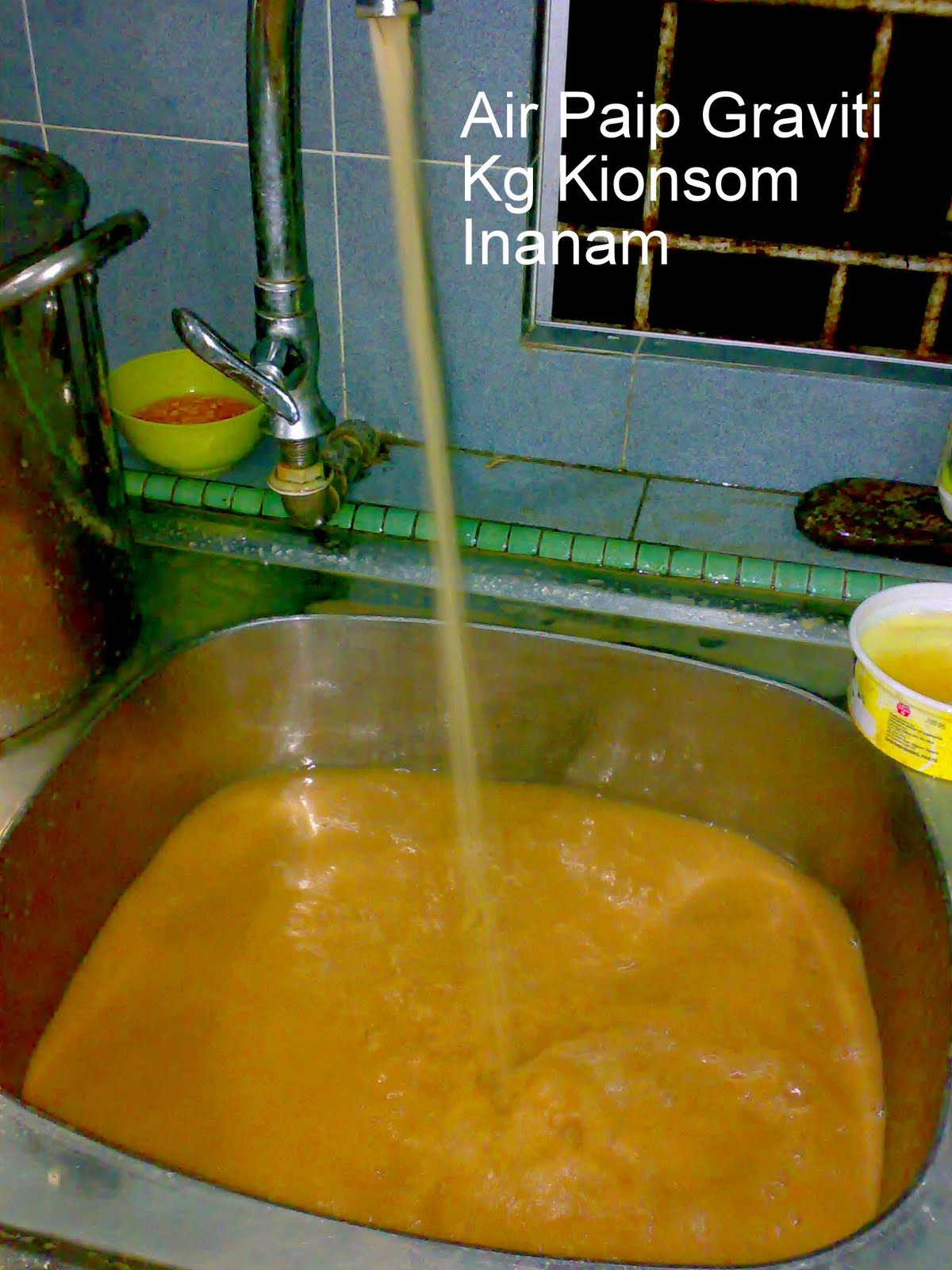
Mud coming out from taps


A businessman bought a land in Kampung Sinagang, along the Menggatal - Bambangan Baru -Poring Poring Road in Inanam. Since early this month he hired tractors to flatten the land, pushing tonnes of earth down a ravine, a water catchement area at Ulu Kiapad.


Now whenever its rain, villagers in Kg Kionsom are suffering, water coming out of their taps no longer safe for human or even dogs consumption. Coming out is mud plus water.


Villagers are now demanding for the businessman to stop work and provide new pipes and tanks for the 2,000 odd villagers.

Wednesday, 14 April 2010

Tun Fuad Stephens

Tuesday, April 13, 2010
"Truth Is The Remedy To All". Fuad Stephens and his Cabinet Members "POLITICALLY ASSASSINATED" ?

By Ronnie Klassen as published HERE http://advocateviews.blogspot.com/

As sure as an orphan would want to know his parents, Sabahans want to and must know the truth as to what really happened on the 6th.June.1976.Was the death of Tun Fuad Stephens and his Cabinet members an accident or 'accident'? Reliable sources claimed that the fatal Nomad Aircraft carrying Tun Fuad exploded in mid-air and dropped to the ground where a second explosion occurred. Why was the aircraft requested to circle and not given the green light to land?

Doesn't the Chief Minister of Sabah take precedence over everyone? Did the control tower inform the pilot to circle because an Air force Hercules C-130 was about to take off? Reliable sources also claim there was no Hercules C-130 on the tarmac that was ready to take off on that day.

In my earlier 2 articles in my blog on the oil royalty issue, we referred to information that was never made known to Sabahans. The revelation by Tengku Razaleigh Hamzah that he was already strapped to his seat alongside Datuk Rahman Yaakub(Chief Minister of Sarawak) and a member of the Pahang Royalty and together with Tun Fuad and his Cabinet Ministers and later requested to disembark from the aircraft by Harris Salleh to visit a cattle farm in Kudat/Banggi is not only baffling but against any protocol- hence a huge can of worms has now open.

It is also tantamount to insubordination and an insult to the Chief Minister then, Tun Fuad. Harris Salleh in a recent press statement ( Daily Express dated 7th.April.2010 ) denounced this fact in what he claimed to be" grossly inaccurate and carried away with pleasantries ".

Was the visit to the cattle farm more important than the historical event that was going to take place - which was the signing of the petroleum agreement between the Sabah Government and the Federal Government/Petronas? Was visiting this cattle farm in the agenda of Razaleigh's visit? Who is now LYING ? The people of Sabah now demand to know the truth. Was this a " political assassination "?


Researching this event gave me the opportunity to come into contact with many Sabahans who are still till this very day angered by the events that took place on the 6th.June.1976.Was there a " BOMB " planted in the ill-fated Nomad Aircraft ? If a bomb did exist who planted it and under whose instruction?

And who is Lee Kang Yu ? It was reliably learnt that Lee Kang Yu was a trusted aid and trustee to Harris Salleh, who fled to Hong Kong where he later passed away. His thumb print had to be used for verification for withdrawal of assets before he could be laid to rest.

Did Lee Kang Yu plant a bomb in the Nomad Aircraft, and who gave the instruction? Among the first person to be at the crash site was senior information officer,TK Wong,who lived a few metres from the crash site.Ironically,the police arrived almost immediately and condoned off the entire area.No known report was submitted by the Information Department to the State Security Committee on the ill-fated crash,why?

In the purported conversation between Tengku Razaleigh and Tun Fuad Stephens, pursuant to the oil royalty, Ku Li had claimed that Tun Fuad had agreed to the 5% oil royalty as Sarawak had earlier also agreed to the 5% oil royalty.Sabah and Sarawak have over the years till this day have had a brotherly relationship.

Now Sarawakians should be asking,did Rahman Yaakub agree to the 5% oil royalty? On the morning of the 6th.June.1976,Tun Fuad and his Cabinet Ministers flew to Labuan with an objective to re-negotiate. Tun Fuad was in total disagreement to the 5% oil royalty hence he brought his Cabinet Ministers to say their piece to Tengku Razaleigh. Did Tun Fuad and his Cabinet inform Tengku Razaleigh that if the Federal Government did not agree to his demand for an increased share percentage for Sabah, he would publicly announce that he was going to pull Sabah out of Malaysia?


In the afternoon of Good Friday (2nd.April.2010) at my lunch interview with Tengku Razaleigh, I sensed a man that was just waiting to tell the truth, but decided to provide bits and pieces and allowing others to complete the jig-saw puzzle. On the evening of the same day, Tengku Razaleigh was no longer the same person I met earlier.


Was he threatened by anyone, group or enforcement agency? Tengku Razaleigh was supposed to deliver a talk on the Petroleum Development Act 1974 as well as the problems plaguing the oil producing states in Malaysia.

Why did Tengku Razaleigh bring up the matter of the plane crash on the 6th.June.1976?

Was he deliberately trying to tell the truth but not the whole truth?In the presence of about 1,000 odd people who were in attendance at the dialogue, Tengku Razaleigh clearly stated that he was all strapped up in the ill-fated Nomad Aircraft and ready to fly with Tun Fuad to Kota Kinabalu, until Harris Salleh boarded the aircraft and"invited" him to visit the cattle farm in Kudat/Banggi, which apparently was more important and took precedence over the signing of the oil royalty agreement.

Another interesting episode of the crash, was the inconsistent manner in which the Inquiry was conducted. The Magistrate concerned requested for a full re- investigation in"an open verdict" as reported in the newspapers but did the authorities re-investigate the crash ? Why not?Whose was the hidden hand that instructed the authorities NOT to re-investigate the crash? Perhaps the time has come for this Magistrate to appear and tell the truth.


Since the exposure of these new developments in my blog, a few political leaders have "suddenly" come out demanding for the case to beRE-OPENED. I applaud the daring stand taken by Datuk Yong Teck Lee and Dr.Jeffery Kitingan in demanding a new investigation on what actually happened on the 6th.June.1976.


What is mind boggling and beyond comprehension is the reversal of the stand of the Sabah State Government. Chief Minister, Musa Aman in a press statement(Daily Express, dated 7th.April.2010 ) said "the amount of allocation from the Federal Government pouring into Sabah is more important than discussing an increase in the oil royalty for the state ", " KL has been very generous with funds for Sabah". He further added "to me ,what's important here is we don't talk about oil royalty".

My question to Musa Aman is, when did Sabah become so rich that our own resources are not important to discuss? Allow me to jerk the memory of our delusional Chief Minister. Sabah is currently the second poorest state in Malaysia and the oil in Sabah belongs to the people of Sabah. Are Chief Ministers required to take an oath of secrecy never to divulge the truth on what actually happened on the 6th.June.1976?


Oil is a gift from God to the people of Sabah, and 'His' name is not Musa Aman. Musa Aman's remarks, clearly proves that Tengku Razaleigh was probably not lying when he mentioned thatNO SABAH CHIEF MINISTER had ever made any attempt to re-negotiate, request or demand from the Federal Government for a larger oil royalty stake for Sabah. Musa Aman has therefore insulted the intelligence of Sabahans and should do the honourable thing by resigning or better yet dissolving the entire assembly and call for fresh state elections.


Could history have changed for the better had Tun Fuad and his Cabinet Ministers not perished in that controversial crash? The truth must be told and the people of Sabah have every right to know the truth and no one has the right to say otherwise. I therefore urge the family members of Tun Fuad and his Cabinet Ministers to join and assist me as well as all right thinking Sabahans who till this day are devastated by the death of our warriors to demand for the truth to be told. The tears of many are still flowing, let us not remain persecuted by "cover- up's ".

"Truth Is The Remedy To All" said Guru Nanak, Sikhism's revered founder and so - let the truth be told.

And, if made necessary through new facts and revelations, let's correct and rewrite Our Sacred History.
Posted by Ronnie Klassen at 2:31 AM

Wednesday, 7 April 2010

Ex-Malay Mail (NST) news editor K Bala dies

The report in the STAR on Tuesday April 6, 2010

Ex-Malay Mail news editor K. Bala dies


GEORGE TOWN: Former Malay Mail news editor K. Bala passed away in Langkawi yesterday.
He was found dead in his bed in a hotel room by his friend R. Sunther at around 10pm last night.
Bala, 66, who was pursuing business prospects in Langkawi, leaves behind three children; a son and two daughters. His wife had died two years ago from cancer.
According to Sunther, Bala, a veteran journalist who was known to be a disciplinarian among his peers, was unwell on Friday.
"I brought him to the Langkawi Hospital for treatment and he was given medication. On Saturday, we called to check on him and he replied that he was feeling better. He was looking forward to watching the Manchester United versus Chelsea football match. I am shocked to discover that he passed away suddenly (yesterday)," said Sunther when contacted.
Bala who is the elder brother of The Star's former regional editor P.K. Katharason, was a lifelong fan of the Manchester United football club and would often take the trouble to catch all of their matches even those held in the wee hours of the morning.
Sunther said he decided to visit Bala when he did not answer the telephone calls yesterday and broke down the door when there was no reply despite the incessant knocking.

Good bye Mr K Bala

I am sad to know the passing of Mr K Bala, my `teacher and boss' when I was working for New Straits Times 1987-2005. He died in his sleep in Pulau Langkawi Monday night, according to TV3 chief new editor Ashraf Abdullah.

Bala, as we all called him, was one of the editors in NSTP that moulded me into what(ever) I am today. Although I was based in Kota Kinabalu, I did received lots of assignments from him who is based at the news desk in Bangsar, Kuala Lumpur. I lost contact with Bala when he quit NST and lived in Langkawi.

I am also a close friend of Bala's brother Mr P Katharason (PK to us all), a news editor with the Star. PK now lives in Kota Kinabalu after retiring ftrom Star. I remember when PK was transferred to Kota Kinabalu. Bala called me from Kuala Lumpur, telling me to `look after" PK and I did by taking PK on a `pubs hopping visit.'

I also will never forget a time when Bala was in Kota Kinabalu to lead NST's coverage of Tun Ghaffar Baba, newly appointed Deputy Prime Minister. I was to play host to Bala and now I felt I was then a very poor host to a great man. Many knew, or might had been told by Bala, What had transpired during his stay in Sabah,

I am sure that journalists and those who knew Bala mourns his passing. Good-Bye Mr Bala.

Good bye Mr Bala

Monday, 5 April 2010

Tukar Baju says Kalakau


'It's time to 'tukar baju' and kick out BN'
Sun, 04 Apr 2010 12:08


This story and more in http://freemalaysiatoday.com/


KOTA KINABALU: Newly-minted opposition politician Kalakau Untol is bent on helping the Kadazan Dusun and Murut (KDM) communities of Sabah to 'tukar baju' (change shirt) in the next general election.
Kalakau, the United Sabah Dusun Association (Usda) president, said he was confident the indigenous community, comprising more than 30 ethnic groups, other natives and the Chinese communities could topple the BN government.

"They have booted out four Sabah state governments before," he said. "Tukar Baju was our battle cry. We ousted the Alliance-led Usno, Parti Berjaya, Barisan Nasional and Parti Bersatu Sabah (PBS) state governments," he told FMT in an exclusive interview recently.

Kalakau, a former state deputy labour minister, ditched BN last month to join PKR and declared that he would be working hand-in-glove with Dr Jeffrey Kitingan and other KDM leaders.

He also said he would ensure that the community which formed the majority of the state's population would vote for Pakatan Rakyat in the next general election.

He said he expected several KDM leaders now holding important posts in the BN government, both at state and federal levels, to leave the coalition for Pakatan Rakyat.

Kalakau said he quit BN as he could no longer tolerate a life of being 'a great pretender.'

"What the BN was offering and had given out thus far was just window-dressing, but the people are politically matured now and know what is going on around them," he said.

Until he left BN, Kalakau was chairman of a state government-owned money making company and a director of several government subsidiaries companies.

"The last straw was when a university student approached me and asked if I believed in all the high praises I had heaped on the BN government during a speech I made.

"She asked me if I really meant what I said about the present government," said Kakakau.

"I was floored. It was awakening. Never in my life did it occur to me that I had been praising the government without justification.

"After a meeting with my supporters, a month later I decided to quit BN," he added.
"
These two states have been taken for granted by BN for too long. We in Sabah have changed the state government four times … it is not an impossible task.
"I travelled to far flung villages in Sabah and the response and support for PKR from the KDM was overwhelming. (It was the same when) I was in Kota Marudu, Kudat recently."

Sabah, Sarawak taken for granted by BN

The Dusun leader said the general election would the be best avenue for all Malaysians, not only for the people of Sabah 'to put on new clothes.'

"If we want to change the policy of the nation, it can only be done if you change and form a new federal government."

He said if Prime Minister Najib Tun Razak had tagged Sabah and Sarawak as BN's fixed deposit, Pakatan Rakyat could also rightfully lay similar claim to these two states.

Kalakau said the opposition could have won in the last general election if there had been a better understanding among the parties, particularly between PKR and DAP.

According to him, in all the constituencies where both PKR and DAP fielded candidates, BN emerged the victor by a slim majority of votes.

In the election, the state constituencies of Kepayan, Luyang, Inanam and Likas showed that the votes garnered by DAP and PKR were more than the votes polled by BN.

"The people of Sabah and Sarawak are aware of this and will ensure that their support will be for Pakatan Rakyat in the coming general election.

"These two states have been taken for granted by BN for too long. We in Sabah have changed the state government four times … it is not an impossible task," said Kalakau.

On his working relationship with other Sabah PKR leaders, he said he is a friend to all. Whenever he travelled, PKR leaders whether KDM or Muslims are always with him.

He said he was overwhelmed by the support for him when he was invited as a guest speaker at a gathering organised by the PKR Selangor at Stadium Malawati Shah Alam recently.

"I was relatively new in PKR but I was accepted as one of them. This is something new to me."

Made entry into politics in the 70s

Kalakau stepped into politics by forming the United Sabah Action Party (Usap) in early 1970s during Tun Musthapha's Usno-led Alliance state government.

Usap acted as an opposition party and was dissolved when he joined Pekamas in 1974, heading the Tuaran Division.

Pekamas failed to match the might of Usno so Kalakau formed another party called United Sabah Assembly Party (Pusaka) in 1977. He was made its deputy secretatry general.

Pusaka also closed shop and Kalakau joined Parti Berjaya in 1978. He joined Parti Bersatu Sabah (PBS) in 1985 and was a political secretary to then deputy Chief Minister (late) Mark Koding.

He did not last long in PBS and five years later in 1989 he resigned and formed Angkatan Keadilan Rakyat Sabagh (Akar) with Koding.

In 1994, after the PBS governmeng was toppled by BN, Kalakau joined forces with current federal minister Bernard Dompok to form Parti Demokratik Sabah (PDS), now renamed United Pasok Momogun Kadazandusun Party (Upko).

Kalakau was Tuaran MP as well as state deputy labour minister when PBS was ruling Sabah (1985-1994). In Upko, he was its youth chief for 12 years and was also a senator.

The plane crash on 6.6.1976 that killed Tun Fuad Stephens


By Ronnie Klassen http://advocateviews.blogspot.com/


Ku Li Opens Up More Uncertainties?
Tengku Razaleigh Hamzah may have been the last man on the face of the earth who spoke to the late Tun Fuad Stephens on the 6th of June 1976,pursuant to the controversial 5% oil royalty to Sabah.The death of Sabah's first Huguan Siou (Paramount Leader of the Kadazan / Dusuns)that perished in a "strange", fatal plane crash on the 6th.June.1976,will continue to haunt Sabahans and probably Malaysians in general for decades to come?Was the last conversation between Tengku Razaleigh and Tun Fuad Stephens on the oil royalty of 5% or was it 30%?, we will never know. Are there secrets that have yet to be unearthed?


I had the distinguished pleasure of interviewing Tengku Razaleigh Hamzah during his visit to Sabah on 2nd.April.2010 at Hyatt Kota Kinabalu,over lunch,that lasted for about 2 hours..Among those present were Dato' Dominic Puthucheary,Mazlan Harun,Thamrin Ghafar Baba and a few others.Ku Li was here as part of his nationwide roadshow,championing the oil royalty issue that has now become the focus of attention among the oil producing states in Malaysia.This was the transcript of my exclusive interview with Tengku Razaleigh.


Ronnie : Tengku,you were probably the last man on earth to have met the late Tun Fuad Stephens,prior to the fatal plane crash.Did Tun Fuad agree to the 5% oil royalty?


Tengku : I had a telephone conversation with Tun Fuad Stephens on the 5th.June.1976,and he agreed to the 5% oil royalty,since Sarawak had also agreed to a similar percentage.


Ronnie : We understand that there was an agreement between the Sabah Government and the Federal Government/ Petronas,which was to be signed on the 7th.June.1976.The signing ceremony however was deferred to the 14th.June1976,in view of the fatal plane crash.Were the contents,particularly the percentage of the oil royalty in the agreement dated 7th.June and 14th June similar?


Tengku : Yes.Both agreements were similar and no changes or amendments were made,only the signatories were different.Datuk Harris Salleh signed on behalf of the Sabah Government,in his capacity as Chief Minister and witnessed by Datuk Joseph Pairin Kitingan.


Ronnie : Tun Fuad Stephens boarded a Nomad Aircraft on the 6th.June.1976 bound for Labuan at 10am.In his entourage were State Cabinet Ministers of Sabah.What's mind-boggling is,why did Tun Fuad Stephens travel to Labuan with his Minister's to meet you,knowing very well that you would be in Kota Kinabalu on the 7th.June.1976 to formalized the signing of the oil royalty agreement? Was Fuad Stephens actual intentions to meet you in Labuan to re-negotiate the 5% as he finally realized that the percentage was insufficient?


Tengku : No.Tun Fuad Stephens agreed to the 5% oil royalty and he was not re-negotiating the terms.


Ronnie : Were you joining Tun Fuad Stephens on board the aircraft that was bound for Kota Kinabalu on the 6th.June.1976?


Tengku : Yes,actually I boarded the plane and strapped myself with the seat belt.I was together with Datuk Rahman Yaakub (Chief Minister of Sarawak). Datuk Harris Salleh then came on board and invited me to accompany him to Kudat/Banggi to visit his cattle farm.I subsequently unfastened my seat belt together with Datuk Rahman Yaakub and boarded another Nomad Aircraft.


When we arrived at our destination,we were immediately requested to disembarked and move away from the aircraft.I was rather puzzled and was later informed that the plane carrying Tun Fuad Stephens had crashed in Kota Kinabalu.I felt very sad,knowing I had just lost a dear friend.


Ronnie : So, Datuk Harris signed the agreement on 14th.June.1976 on behalf of the Sabah Government or more approximately on behalf of the people of Sabah.Tengku,Sabah being an oil producing state in Malaysia was once the richest state in the country.Today as you are very well aware,Sabah is now the second poorest state in Malaysia,although governed by Barisan National.Has any attempt been made over the last 34 years by any Chief Minister after the death of the late Tun Fuad Stephens to re-negotiate,request or demand a higher oil royalty percentage from the Federal Government?


Tengku : No Chief Minister has attempted to request for an increase of the 5% oil royalty from the Federal Government.


Ronnie : Sabahans have been crying foul over the manner that the Federal Government has been treating Sabah,do you honestly think that Sabah should be demanding for higher oil royalty?


Tengku : The people of Sabah have every right to request or demand for a higher oil royalty,the question is whether the Federal Government is prepared to oblige.


Ronnie : Tengku,allow me to sidetrack my next question away from the oil royalty issue.The upcoming Hulu Selangor by-election has now been fixed by the Election Commission.Nomination will be on the 17th.April while Polling has been fixed on the 25th.April,2010.In your opinion,how would you rate the chances of UMNO/BN and the Opposition?


Tengku : The Hulu Selangor by-election will not be easy for Barisan National.PKR will draw support if it's Malay candidate is good.Barisan National will not get the support from the Malays.


With that I concluded the interview.


Have the people of Sabah been betrayed by the greed and arrogance of the past Chief Ministers of Sabah? Will Sabahans finally decide what is important and what rightfully belongs to them or will Sabahans still continue to allow the crooks that walk the corridors of power to dictate and decide the fate of Sabahans at their own desecration?


I also attended the talk by Tengku Razaleigh themed "Minyak Sabah Untuk Siapa" which was organised by the Sabah Dusun Association and the Persatuan Bloggers Sabah at the Kadazan Dusun Cultural Association Hall in Penampang,Sabah.Ironically,the same Tengku Razaleigh that was so fiery and vocal in his speeches in Kelantan recently about how Kelantan was short changed,wasn't the same person.


The presence of "fully armed" police personnel at the venue was also mind boggling.Did the police special branch or UMNO play a role in toning down Tengku's "NO HOLDS BARRED" fiery readiness to expose the truth? Was Tengku Razaleigh going to disclose the truth of what actually transpired in his last conversation with Tun Fuad Stephens?Was there a hidden hand that prevented him from telling the truth?


What was hoped to be an eventful talk and dialogue about the oil royalty by Ku Li turned out to be mere rhetoric and a shamble due to poor turnout. It was not too well-organised - publicity materials were unseen,other then the banner located at the entrance of the Building,which was too small,that one needed a magnifying glass to read it's contents.To those that did attend,it was a wasted and frustrating night for many,as visibly seen by the disgruntled faces.


Nonetheless, it was a daring effort, and hopefully we can see some improvement in the near future